Dean & Ginny's excellent adventures...  Main Adventure Page

South America—2020: << Part 1  <<Part 2  <<Part 3  <<Part 4  <<Part 5 <<Part 6 <<Part 7 <<Part 8
 <<Part 9   <<Part 10  Part 11 Part 12>> Part 13>>  Part 14>>  Part 15>>  Part 16>>  Part 17>>  Part 18>>
Part 19>>  Part 20>>  Part 21>>

The Volendam

This ship is the same class as the Amsterdam, but with a few more passengers (1432) and this ship and the Zaandam are now the only two left in the fleet of this size.

 
The Lido pool deck area...


The Sea View pool, on the aft deck of the ship, decorated for a sail-away party.


The Lido cafeteria/dining area where we eat except if we are invited to dinner by guests. Note: When we're working on a ship we wear our guest presenter name tags


The Showroom at Sea is where I give my presentations. When I give presentations here, the images on the screen are not projected, but are shown on a series of LED screens mounted as a wall that rolls onto the stage. The images are beautifully crisp.


A large mural on the wall of a public area.


A sculpture of Bacchus, the god of wine, on one of the staircases.

 
The atrium sculpture that extends three decks. Our captain pouring champagne on a fun block party.


The crossing of the equator ceremony used an arapaima fish from the Amazon. I pointed this out before my lecture that day since I'd covered these interesting fish in one of my Amazon presentations.

~ ~ ~ ~ ~

Buenos Aires

Our first port on the Volendam was not far away--just across the Rio de La Plata to Buenos Aires, Argentina.


We headed to the city botanic garden, which included this wonderfully ornate glass conservatory.

 
We found some maté shrubs. These hollies (Ilex paraguariensis) contain caffeine. It's a popular drink, which is why many South Americans carry their maté cups and thermoses of hot water around with them.

 
A huge and gnarly cactus with fruit.

 
A lady of the leaves and large, drooping flowers of an angel trumpet tree.


This sculpture is called "Saturnalia."


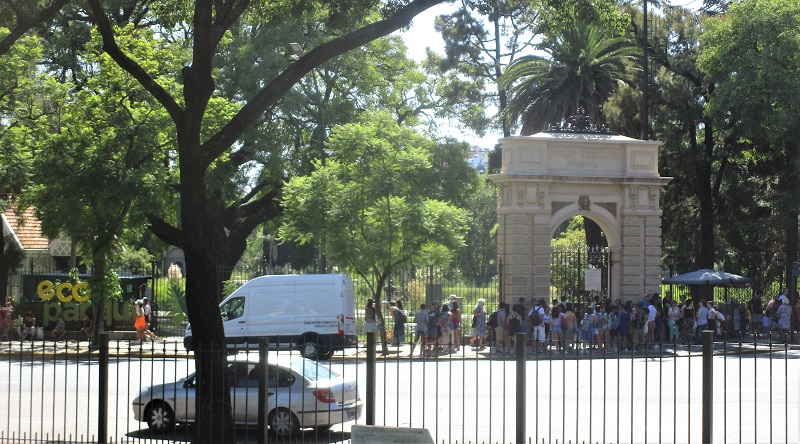
A crowd waiting for opening time of the Eco-Park.


We loved the wildflower meadows in the park.

 
From goldenrod to baobab trees the park had a wide variety of plants.


The Patagonian mara or dillaby (Dolichotis patagonum) is a relatively large rodent that had free range in this park.
Visitors were instructed not to walk on the grass.

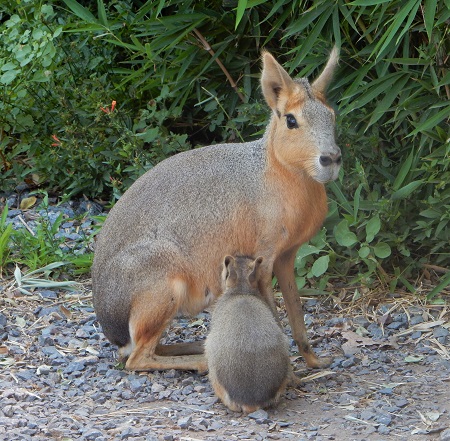
 
A nursing baby dillaby. Look at all that down in this ground nesting duck's nest.

  
This building was built as a shelter for nursing mothers and is apparently not used for this purpose any more. We decided it was a good place to have our lunch since picnic tables and benches were not common in this park.
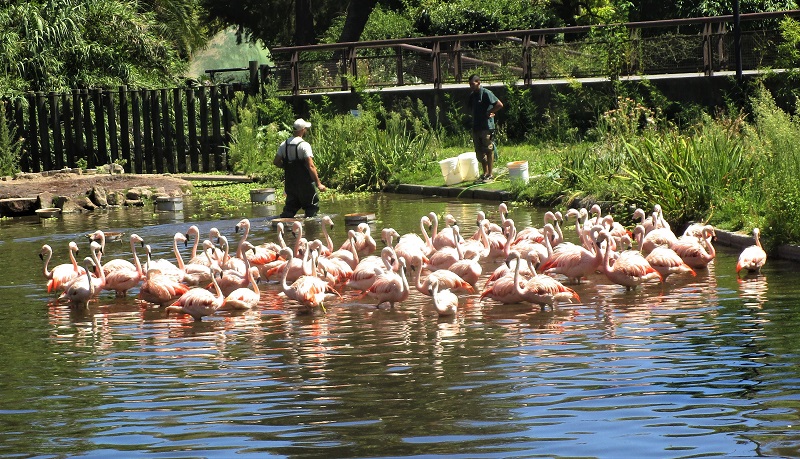

Feeding flamingos...

 
A resting Pea Hen and a Southern Screamer (Chauna torquata) (We saw a horned screamer, a related bird, in Paratins, Brazil in our 2019 Amazon cruise assignment.)


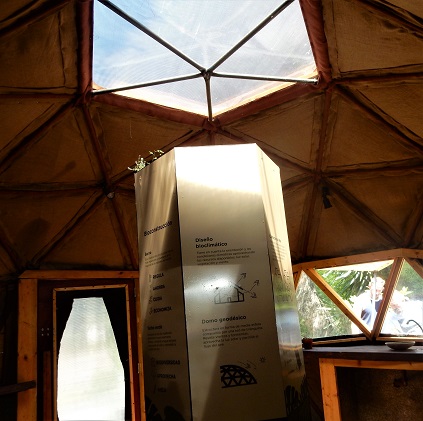
This is an eco-hut.


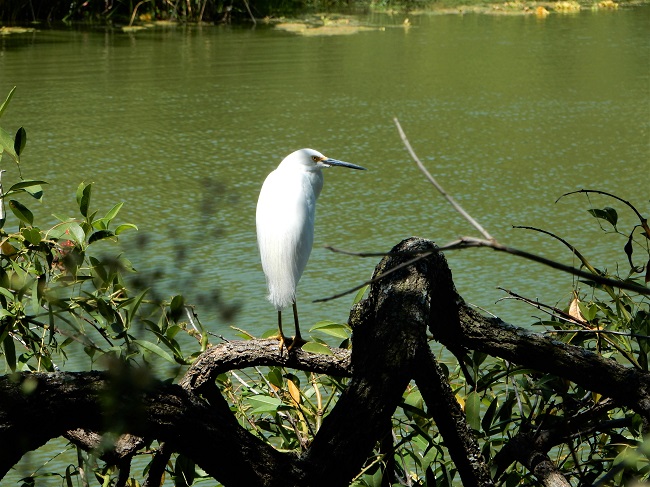
Our parting shot in this lovely park is of a Snowy Egret.


The next morning, we were off on another great adventure.


We took a photo of this majestic tree in 2012 on our first world cruise. (Go halfway down that page to get to Buenas Aires.)
Back then we didn't know that this was an ombu tree. Always learning...


We walked through the warehouse section of the city too get to the large park that had been built on top of urban rubble and dredge spoils between the edge of the city and its shoreline of the estuary.


A rodent at the edge of the mowed area.


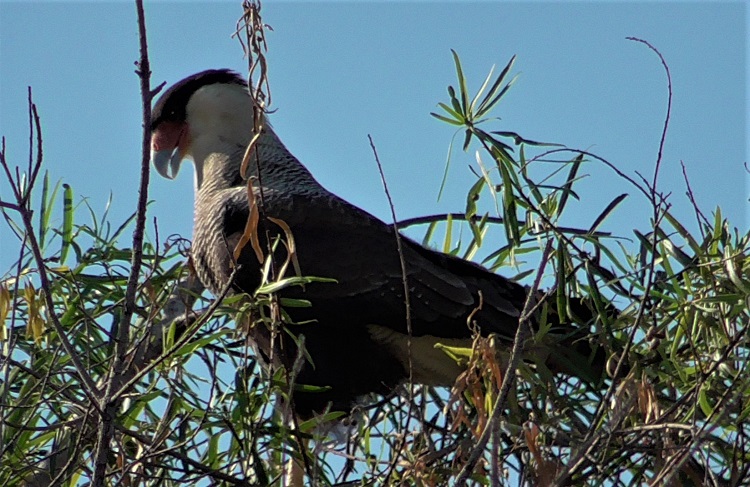
A Caracara that would eat that rodent.


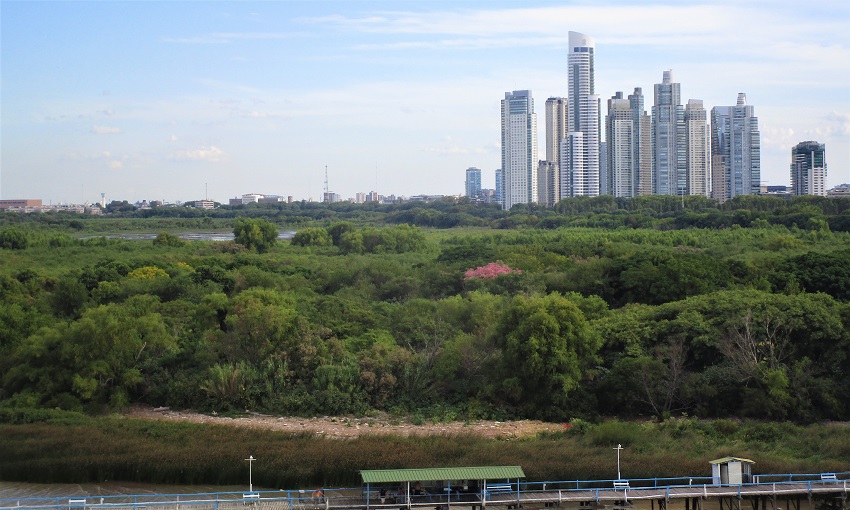
This park is built on the spoils from dredging and other urban junk, but now it has become an urban asset.
Our ship and another are not too far away.


Tiered buildings provide rooftop living at multiple levels.


As we sail away, you can see the extent of the park that buffers the city from storm surges and more.

Then we sailed out of Rio de la Plata and headed north. Our next stop was Santos, Brazil.

On to Santos, Brazil ... >>

Main Adventure Page

Top of page:

© Sky-Bolt Enterprises 2001-2020