Dean & Ginny's excellent adventures...  Main Adventure Page

Texas--04/11: << Part 1 << Part 2  Part 3  Part 4 >> Part 5 >> Part 6 >>

We saw lots of birds in the one day and night we stayed there, but we headed out the next day.

Falcon Lake is formed by a dam on El Rio Grande between Texas and Mexico. Our campsite in Falcon State Park was in the shade of two mesquite trees near the shoreline. 


Above a lone great blue heron flies in front of the smoky sunset--we could see smoke from fires in Mexico.  A western meadowlark sits in the top of a mesquite tree and a flock of great blue herons flies overhead.

<< A pair of great-tailed grackles sit in a palo verde tree near the lakeshore.  We learned about these grackles at Goose Island.  Their calls include sharp whistles, tones that sound like a cell phone ringing, and a weird call that sounds like the crumpling of a paper bag. 


 We rode our bikes up the hill to the butterfly garden--pretty flowers,
but not too many butterflies in the heat of the late afternoon. 


We read the labels so we'd be better informed as we traveled the state.


The vegetation and the birds sure are different in southwest Texas.  Above: a mesquite tree with its yellow flowers and a Mexican hat with its beautiful burgundy and gold petals.  Below: a roadrunner and a study in succulents including blooming yucca, cholla, prickly pear and ocotillo .  


<< A coot swims toward the sunrise the next morning.  Doesn't this look peaceful?  But the birds were not the only visitors at this hour, many boats filled with fishermen motored out to try their luck out in the lake.


As we headed out of the park, we saw this herd of big horned goats on the other side of a fence--not sure whether they were domesticated. They seemed skittish when approached. 

Since the Mexican border is so close by, we were stopped several times at border patrol checkpoints--some were temporary, like this one, while others were set up at permanent locations with various scanners and dogs sniffing for people and drugs.

Our next destination was north along the western border: Seminole Canyon State Historical Park.  It's called a historical park because of the ancient pictographs in the caves. Here's the state park webpage for Seminole Canyon.

Now we really were in an arid climate except that nearby there is yet another dammed lake along El Rio Grande: this time it's Lake Amistad, which we've been to before, but we hadn't been to this state park.   


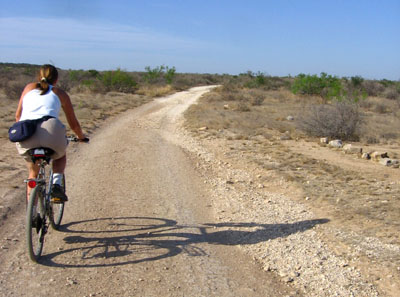
We rode our bikes out to the scenic overlook of the lake/river/gorge. The green area behind us is panther cave, which was inhabited by an ancient people: you can only get to it now by boat.


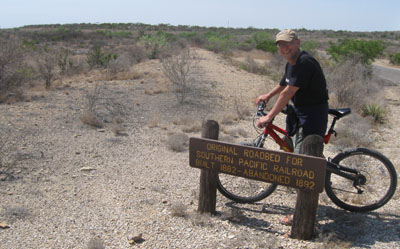
Indians were not the only folks to use this area, the southern Pacific Railroad came through here as well.  Dean is standing next to the old railroad bed and this stone oven was used to bake for the railroad workers.


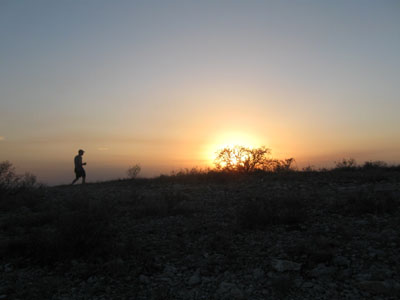
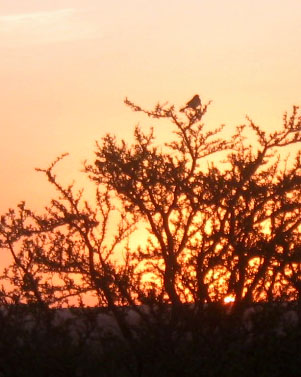
We walked up to the hill near the campsite to take photos of the sunset.


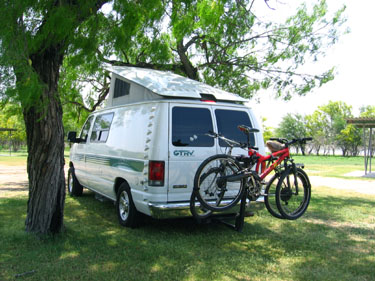
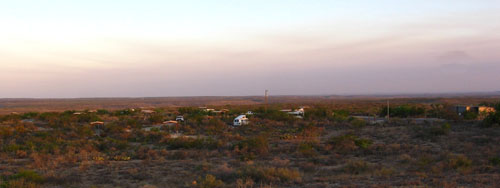
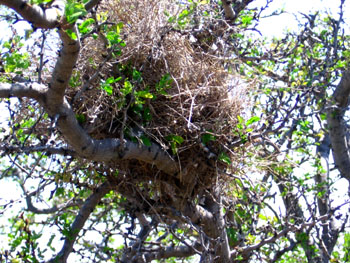
Looking back down from the hill, our van is near the center of the photo on the left--not many people camping here.  Surprisingly there were lots of birds.  Right next to our campsite, an occupied cactus wren nest sits in a tree with
its entrance hole hidden from view.

Above, a barn swallow swoops in for a bug. To the right,
a mockingbird greets the sunrise.  Below, a group of vultures work the rising heat of the canyons

We also saw a hooded oriole, scissors-tailed 
flycatchers and other interesting birds.


Both sides of a bronze Indian shaman greeting the sunrise.  

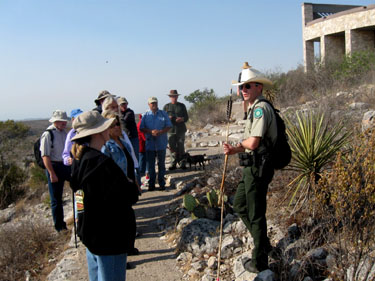
The only way to see Seminole Canyon up close is to go on a ranger-guided tour.  We joined Ranger Dave and about 15 other folks on the daily 10am tour. Here, Dave stands in front of the above statue, and talks to us about the ancient and not so ancient peoples who have lived in this area.

First the name of the this canyon (Seminole Canyon):  The Seminoles were a mixture of various Native Americans and former slaves who joined together and lived in the swamps of Florida.  In the mid 1800s, many of the Seminole Indians were moved from Florida to Oklahoma. But the blacks of the this group were not welcome in Oklahoma because the Indians there kept slaves and the civil war was beginning, so many of the blacks kept moving west. The black Seminoles were hired by Mexico for tracking and fighting and then they were hired by Texas to keep out the Apaches and Comanches.  A spring in this canyon was named after them and the map makers seeing the name of the spring named it Seminole Canyon.  

Centuries before the Seminoles and the Pacific Railroad, an ancient people lived here and also left their mark.


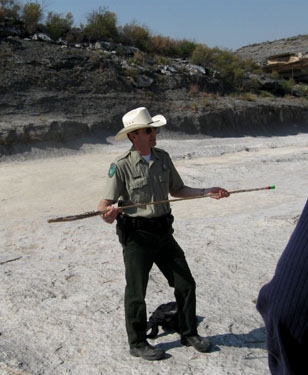
Once we were at the canyon floor, Dave demonstrated a special throwing device, called an atlatl, used by the ancient people who lived here.  As we approached the cave, he quizzed us as to why they lived in this cave and not the one a little farther up the canyon.  Answer: It faces east to capture the warming rays of sun in the morning, but shades the sun during the hot afternoons.


In addition to talking about the meaning of the pictographs determined by interviews with related, but isolated, tribes in Mexico, Dave talked to us about how these people lived their day-to-day lives. This rock was probably a food preparation rock because it's smoothed and sealed from years of exposure to the human touch.


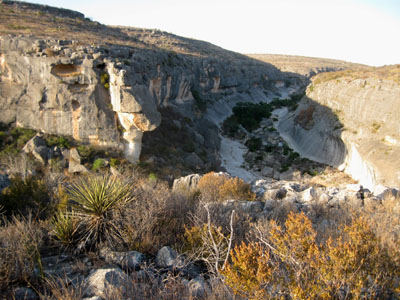
Looking out across the canyon, it was interesting to think about how those folks lived here--and what a view.  The experts say that the climate here back 7,000 years ago was milder and wetter.

The original archeologists who studied this site also left their marks.  This was site 73 in the VV (Valde Verde) County and E. Lindfield was here in June 1884. 
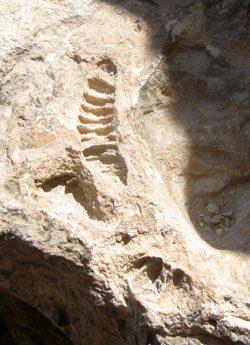
Dean and I were also interested in the rocks themselves and the plants that eked a living in this harsh environment.    


Looking straight up, this photo of a little tree poking straight out from the rock above the cave is disorienting. 


    These trees are between rocks and hardplaces, but still manage to hang on.  The one on the left is a mesquite tree that is estimated to be more than 200 years old.  

The next morning we packed up before sunrise, fixed our breakfast at the visitors' center parking lot, and then hiked the trail at the top of the canyon and down to Seminole Spring.

On to Seminole sunrise >>

Main Adventure Page

Top of page:

Sky bar            

Sky-Bolt Enterprises Where great ideas come out of the blue.

© Sky-Bolt Enterprises 2001-2011