Dean & Ginny's excellent adventures...  Main Adventure Page

World Cruise—2018: <<Part 1  <<Part 2  <<Part 3  Part 4 Part 5 >>  Part 6 >>  Part 7 >>  Part 8 >>  Part 9 >>
Part 10>>  Part 11>>  Part 12>>  Part 13>>  Part 14>>  Part 15>>  Part 16>>  Part 17>>  Part 18>>  Part 19>>  Part 20>>  Part 21>>
Part 22 >>  Part 23>>  Part 24>>  Part 25>>  Part 26>>  Part 27>>  Part 28>>  Part 29>>  Part 30>>  Part 31>>  Part 32 >>  Part 33>>
Part 34>>  Part 35>>  Part 36>>  Part 37>>  Part 38>>  Part 39>>  Part 40>>  Part 41>>  Part 42>> Part 43>> Part 44>>  Part 45>>

The Panama Canal Transit

This was our fourth trip through the Panama Canal. Twice in fall of 2012 where we fully documented the history of the canal and how it works, so click the link, 2012 Panama Canal, for those details. We also made the transit during our 2015 world cruise, so this page covers what was different. Now the new, bigger locks are finally in operation, so that's what was new this time around.

The Amsterdam was in line, ready to go through at 5am. We were up early to watch our progress.

 
On our way to the first lock, we went under this unfinished bridge.

 
On our left at the first set of locks were the new big locks and with all the lighting, they operate through the night.


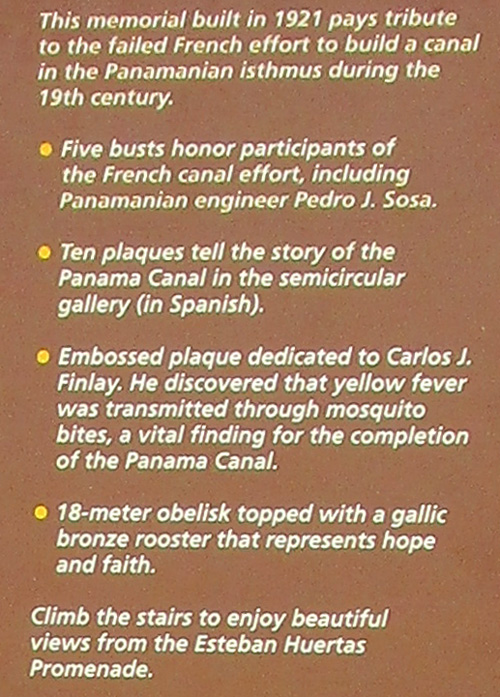
Off to our right was the so called "French Cut" where the original failed canal path was begun.


Another cruise ship was ahead of us...


And a gray military ship was behind us.

 
There are navigational aides such as lighthouses. Once we reached the big Gatun Lake, a huge container ship passed going the other way. The Captain said that it was 300 feet longer than the Amsterdam and it carried 11,000 containers.

 
Panamanian merchants boarded the ship at the beginning of the transit and stayed all day—It's an 8-hour transit. This woman was in full regalia to help with the marketing.
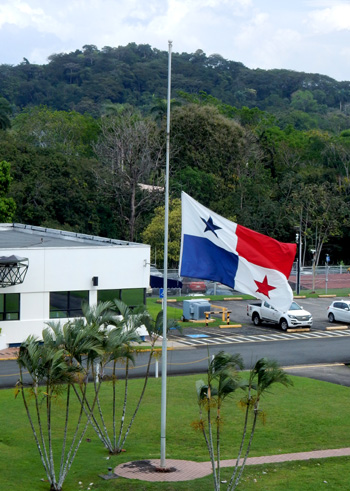
 
The flags were at half mast because of Martyrs Day—people who lost their lives during their struggle for independence. The yellow-blooming trees were beautiful.


A view of the new locks, which have a more efficient design, so less water is used. The whole system still works because of all the rain in the rainforest filling up Gatun and Miraflores Lakes. Each of the new locks is 1400 by 180 feet, and they don't use the electric mules. The ships that pass through them pay a much higher fee for their transit.
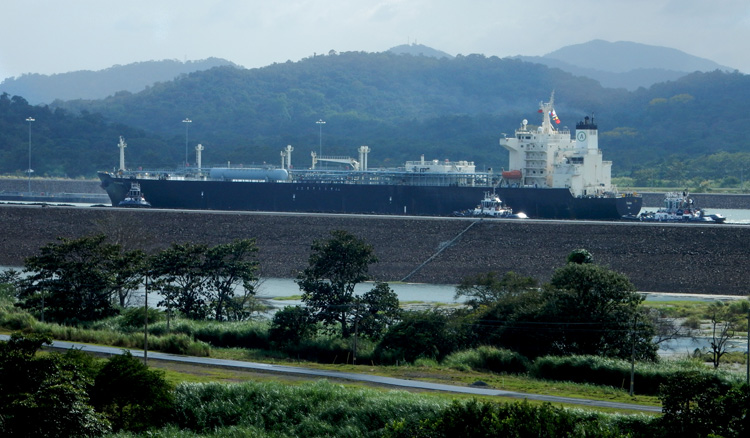

A ship in the new locks.

 
The Panamanian commentator works in the Crow's Nest where chairs were set up so people didn't have to go out in the hot sun to see what was happening. Dean and I were all over the ship and put on quite a few miles during the day.


A tourist boat and a private sailboat were tied together in a lock.


Some white-blooming trees.


The last lock drops us down to the Pacific Ocean level. This is one place where it's evident how much water is used in the process.
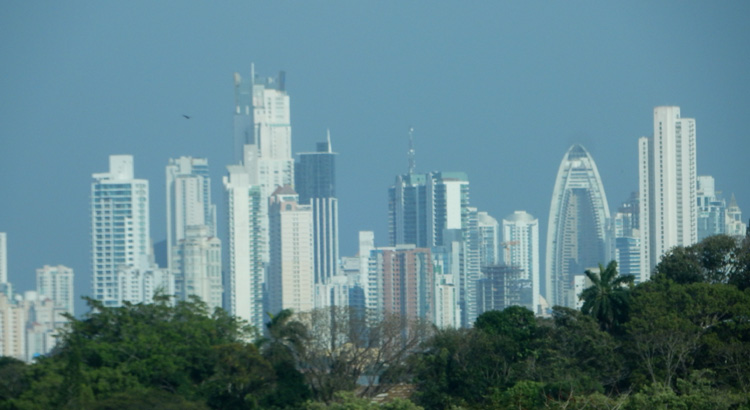

The Panama City skyline looms over the jungle.


Boats on the shoreline serve as housing for some people.


We sailed around this spit of land with the Frank Gehry-designed Bio-museum and we joined 2 or 3 other ships at anchor off Fuerte Amador (Fort Amador).


A water-based gas station.

Fuerte Amador


The tenders ran to shore from 7pm to 1am after we anchored with the other ships, but we opted to see the entertainment that night. So we were off early the next day and this lens-shaped cloud over the mountain caught our eye from the shore.

 
We caught a public bus to the transit center. We had a nice conversation with these 3 guys on the way.

 
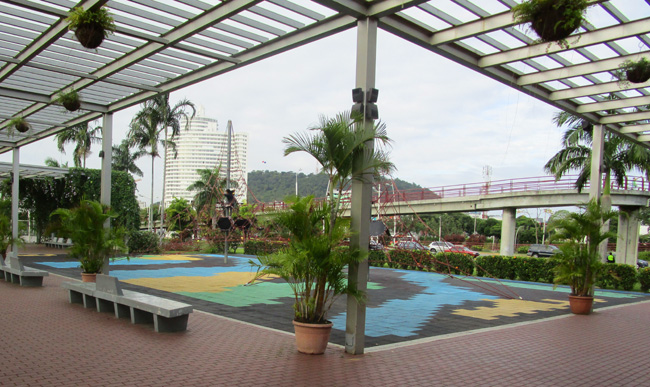
Our goal was Panama Viejo (Old Panama). At first, we were somewhat confused when the bus driver told us that this large seaside park was the correct stop. What we didn't realize was that this was the closest bus stop because no buses run in the old section.


On the way to Panama Viejo, there was a fish market. Picturesque fishing boats were lined up along the dock.

 
Some dealing in the parking lot outside the market.

 
More action on the far side of the dock...

 
We met this guy at the entrance to the fish market. He had greens to sell to the fish merchants. Corvina had been the fish on our menu the night before.

 
The crabs were huge. Fish filleting.

 
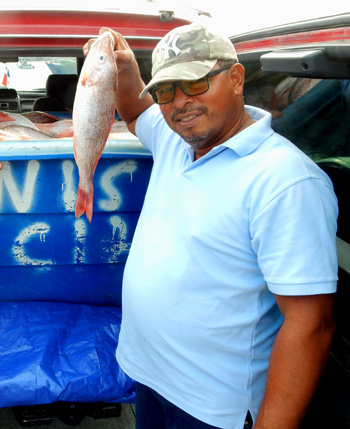
This merchant gave Dean a tutorial on the fish and other critters using both the English and Spanish words.

 
We liked the fishy gates and gratework around the market. Outside of the market itself, pelicans hung out waiting for an easy meal.

 
Outside the "official" market was a more interesting informal market.


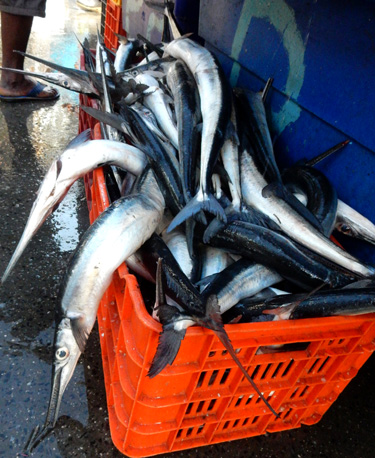
We'd never seen or noticed fish guts for sale at a market. We guessed that people might use them for fishy stews or something.

 
This guy stacked several large fish onto the basket attached to a scale.

 
As we walked away we noticed this sign that says Japan had paid to build the market building. Also, we noted that instead just a fish market, which would be Mercado de Pescados, it was a seafood market—Mariscos. Okay, now we were on our way to "Old Town" or as indicated by this sign, "Panama Viejo." But wait, see the trucks behind Dean???

 
Another market for pretty much everything except fish: Chicken, beef, pork, juices, vegetables, greens, grains, and fruits. At the front of this market and eleswhere women were selling lottery tickets.


Some merchants were still setting up.


Tree trunk cutting blocks were well used.


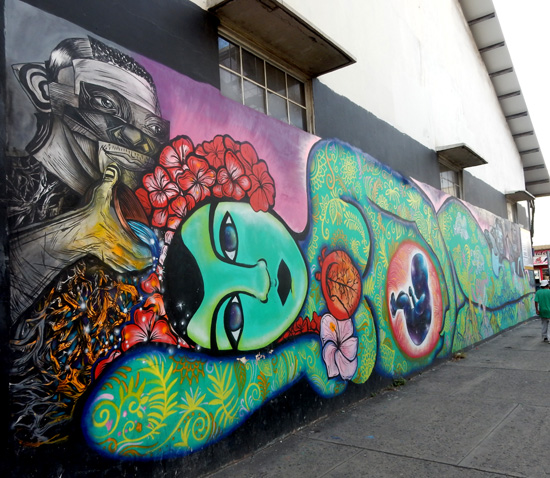
Interesting street art where a pregnant woman (maybe representing Mother Nature) is being cared for by other beings who seem to be watering her flowers.

 
On our way to Panama Viejo, 2 women sharing a load demonstrate both modern and traditional dress.


There was about a mile walk from the fish market to Panama Viejo. Some streets were being restored.

 
Two women were buying shoes right next to a wheelbarrow of wet cement. A friendly woman waved to us from her balcony.

 
A nice city park filled with tropical trees and people.

 
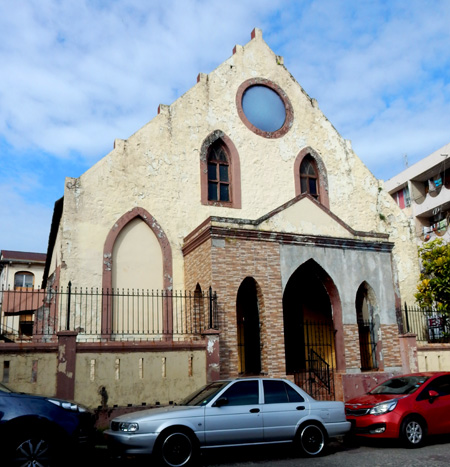
Some buildings were in pretty good shape; others were not.

 
The St. Joseph Church supported a good variety of plants on its steeple.


As usual, we find that interacting with the locals is the most rewarding part of our travels in cities and towns.

  
This child was playing in and out of the open door up on the balcony of this mint-green building.


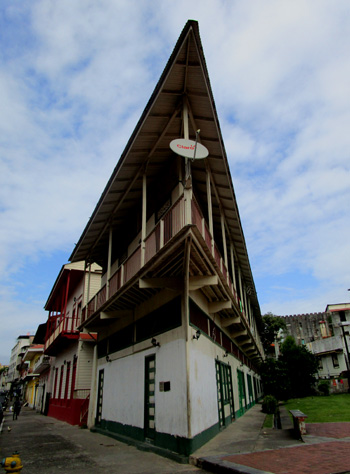
This boutique hotel still had its holiday wreath at the third floor level on its beveled corner.

 
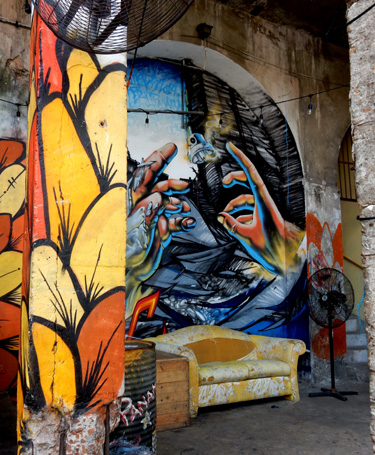
An open door decorated with a wreath invited us in an interesting courtyard—an artist community center—mostly French grafitti artists according to a caretaker.

 
The artists had covered the walls with street art.


Locks of love overlook the new Panama City.

 
The Tourist Police office is located in this section of the city.

 
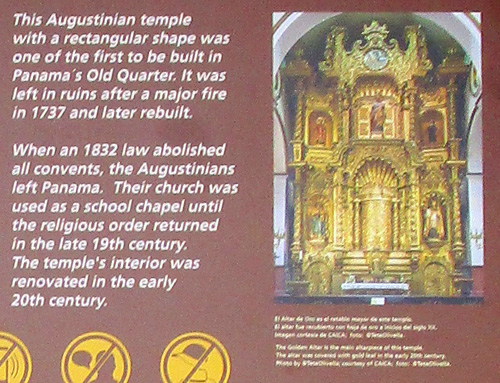
A huge church complex takes up a whole block.


This building is attached to an old fortification wall.


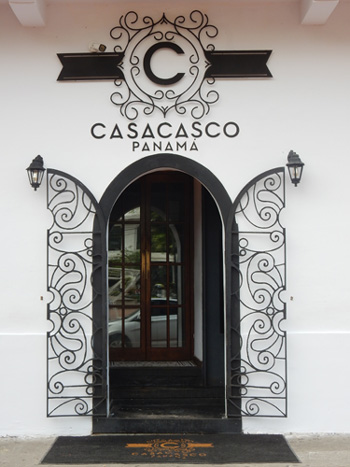
An immpressive structure containing several businesses including a restaurant named Casa Blanca, which was not truth in advertising since the building was red and not white.


We liked the tree painted on this building

 
Then we walked past the fish market area again and stopped for lunch in the big park where we'd gotten off the bus.

As mentioned before, there were no buses in Panama Viejo, so it was a fair hike for our walking tour, but we got to rest on our bus tour of Panama City and its neighborhoods. We had to head back to the transit center and then got on our bus back out to the port. Dean had purchased a bus card and had put $10 on it, but that was much more than needed since each ride was about 25 cents—we scanned it twice as we boarded the buses. We'll keep the bus card and use it next time we travel here.

And so we bid Panama adios. 8 sea days were next. Dean's Log on Panama, Fuerte Amador, and all those sea days.

On to Nuku Hiva... >>

Main Adventure Page

Top of page:

© Sky-Bolt Enterprises 2001-2018