|
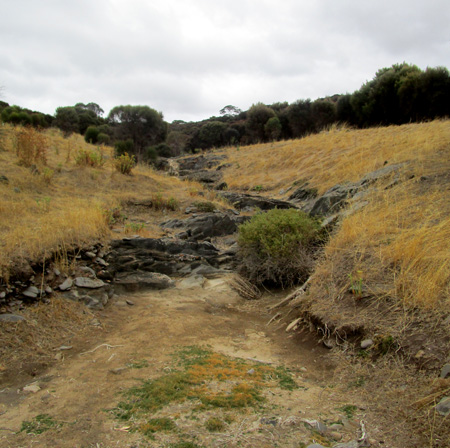 
In the American west, this would be called an arroyo, not sure
what dried rivers are called here.
Much of the vegetation has small protected leaves or thorns, prickles
or other sharp protrusions in order to discourage herbivores of
this dry climate.

 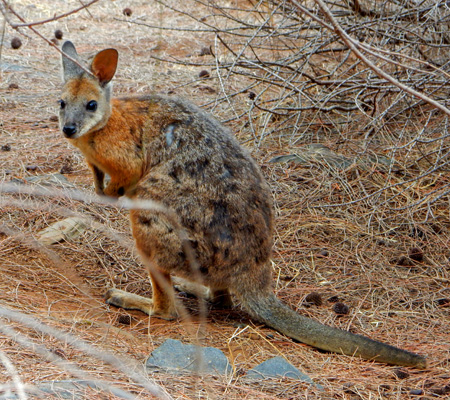
As we made our way in-between these thickets, we saw this lone
wallaby, who seemed not to mind our presence too much.
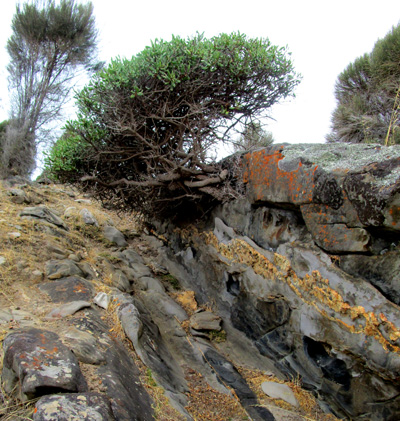 
We came back down toward the rocky shoreline again.
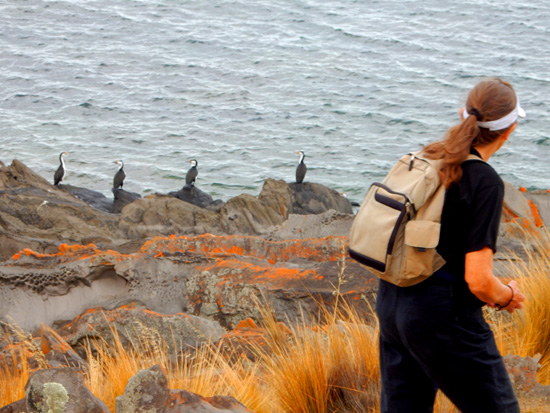
 
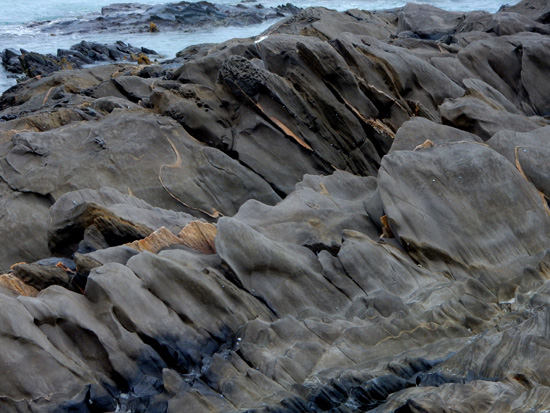
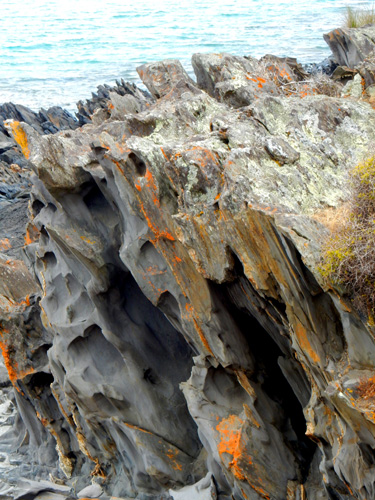
The eroded rock formations started to look like faces. We climbed
up to get to the hiking trail.

More wallabies. They all seemed to be in the process of moltingr.


We watched the wallabies for a while and then set off at a faster
pace along the trail so we could get to the head of land before
we had to turn around to catch a tender on this shortened day.
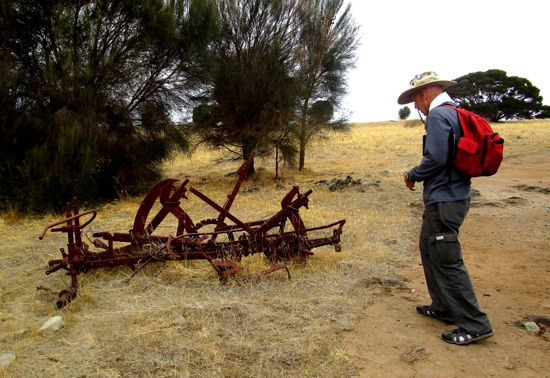

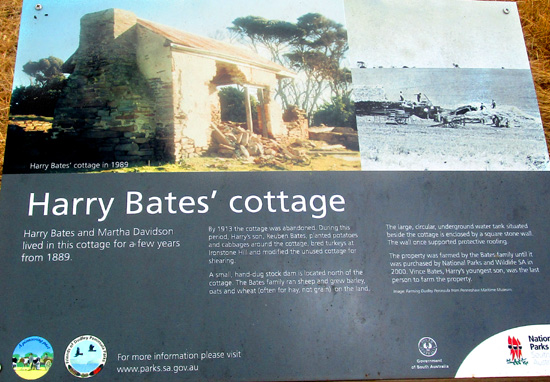
There had been a farming operation out on the headland, which
had used innovative methods and machines for easier thrashing
of the wheat. Now just ruins and rusted relics are left to mark
the spot.
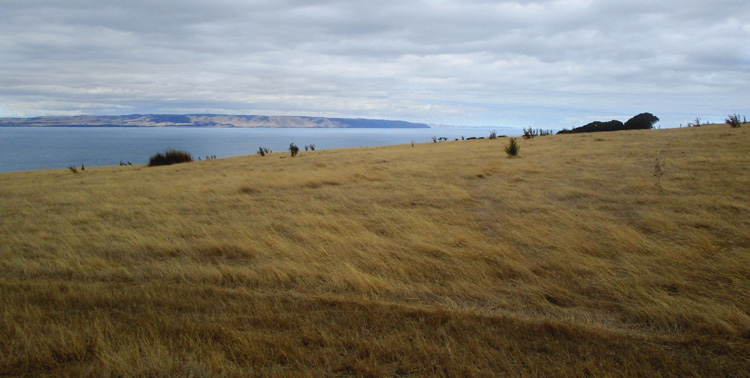
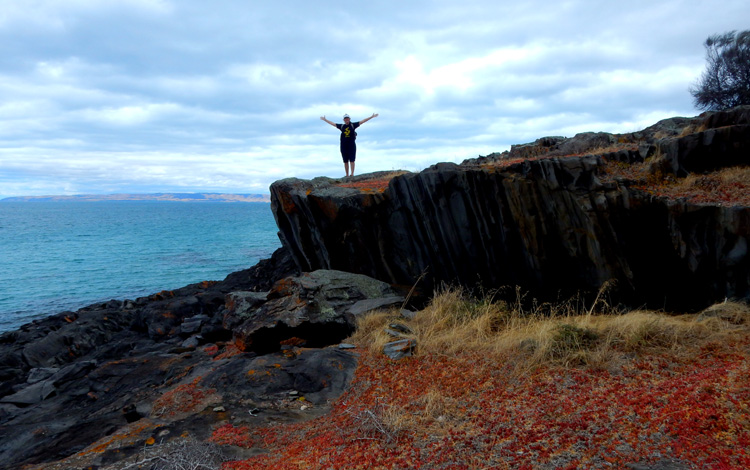
The view was good.
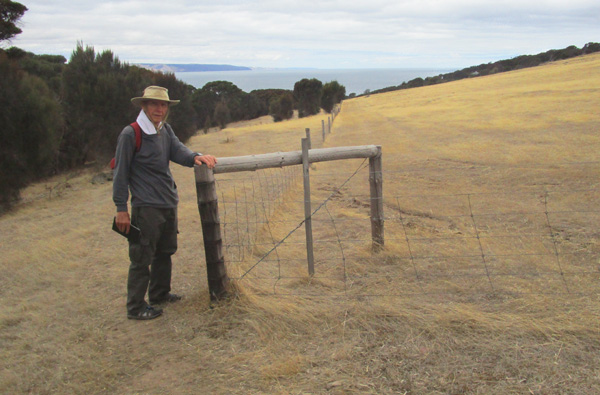
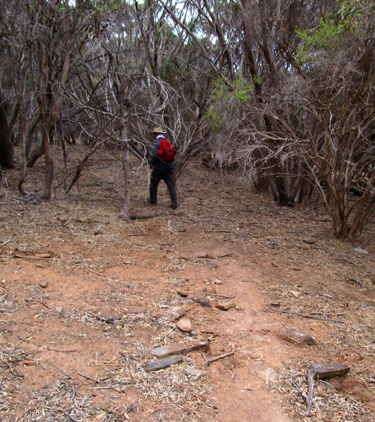
We walked down the fence-line and then headed back into the woods...
 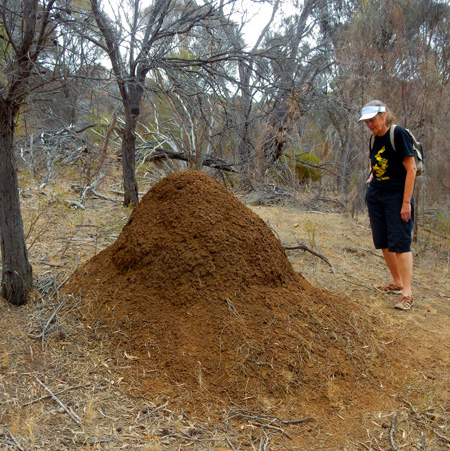
where we found a huge termite mound. It didn't seem to be active,
but we were not too interested in testing its viability.
 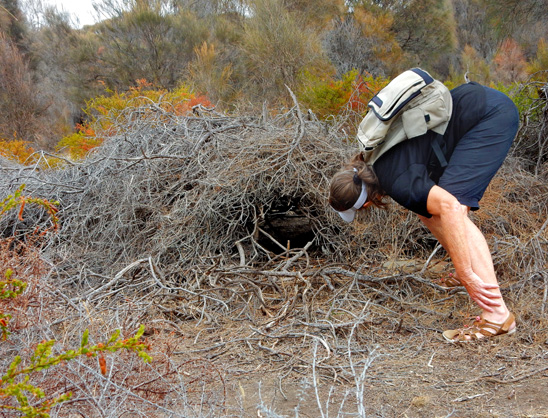
We saw more wallabies and some probable wallaby shelters.
 
We set a faster pace toward the tender dock, which was on the
populated peninsula at the top of Dean's photo.


We liked watching flocks of small birds as they flew in and out
of the thorny thickets. Colleen McCullough, an Australian, wrote
"The Thorn Birds" years ago. It's posssible that scenes
like this could have been part of her inspiration.
 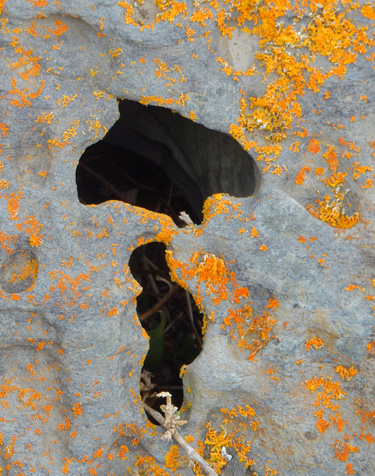
We were back on the rocks again...

Dolphins! We'd seen them in the same area both on our way out
and again on our way back.

 
We did a quick check of email at the tender dock and then walked
the flag-decorated dock after a great day on Kangaroo Island. Dean's log on Kangaroo Island.
Our next stop was Adelaide, Australia which was
a short hop across the bay. Actually, we made the quick trip in
the evening and were tied up at the dock that night, but no one
was allowed off the ship until the next morning.
|