Santarem, Brazil
Santarem was our first port up the Amazon River.
We had plans to go out to a national preserve in the Amazon rainforest.


This river boat was being loaded with a huge amount of produce,
which was probably headed up a tributary.

 
Waiting to load up on a river boat can take a long time, so why
not have breakfast while you wait? Meanwhile these vultures may
be wondering about their breakfast, too.

As is our usual mode, we walked for some distance from the port
before flagging down a cab.
 
José, our driver for the day. Bio fuel pump at the gas
station...
 
A poorly translated warning sign about trafficking of children.

From the taxi...
 
While we were registering to get into the forest, a tour bus pulled
up, but we were far enough ahead after their bathroom break at
the entrance that we had good quality time in the jungle without
a bunch of people.
 
A wonderful titan beetle on the entrance building.

 
In the woods we found rubber trees with tapping scars. These are
shells from the rubber fruit.
 

A display of products from the forest on a picnic table set up
for a tour group demonstration.

An overlook at the end of the road. We can see the Tapajos River
from here.
 

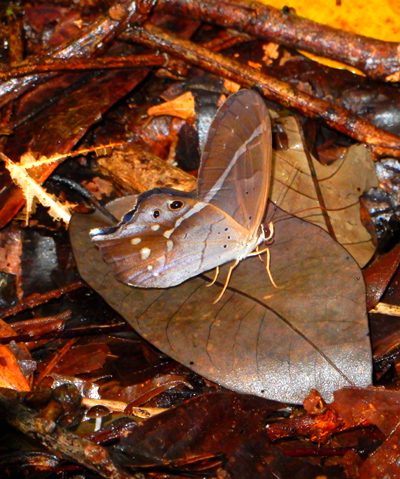
From termites to beautiful butterflies disguised as leaves.
 
Termite tubes and greenish fungus.
 
Hanging termite nest and the nasty thorns of the peach palm.
 

An old termite mound covered with a green fungus with fruiting
bodies ready to spread its spores into the forest.

Relaxing while waiting for his clients(us) to walk through the
forest.

A gigantic spider web more that 50 feet long and 20 feet high
along the path. I used this photo as an example in my rainforest
presentation of how aggressive predators are and that no resource
goes unclaimed for long in this highly active ecosystem.
 
We stopped to photograph a porcupine on the road or as Jose told
us, the Portuguese word for them translates to spined pig.

We signed out at the entrance station and used the restrooms.
We noticed the elaborate water system out back.
 
A corn field across the street from the preserve entrance. José
picked an ear. It looks like a fairly standard type of corn.


We stopped at a soybean field further down the road.
 
Achiote tree: the source of annatto, a natural red food coloring
and dye used in Cheddar cheese. The açai palm fruit has
become very popular outside of the Amazon region because it's
very high in antioxidants.


We had seen the turn off to Belterra, Henry Ford's second try
at developing a rubber plantation in Brazil. I talk about his
failed attempts at this in my rubber presentation, so we asked
José to take us there on the way back.


Ford built two American-style communities with schools, community
centers and hospitals, from the late 1920s until World War II
in the early 40s, when he gave up.
 
 
A bee nest on one of the rubber trees.
 
 
Old equipment large and small...
|