Dean & Ginny's excellent adventures...  Main Adventure Page

World Cruise2015: << Part 1 << Part 2 << Part 3 << Part 4 << Part 5 << Part 6 << Part 7 << Part 8 << Part 9 
<< Part 10
<< Part 11 << Part 12 << Part 13 << Part 14 << Part 15 << Part 16 << Part 17 << Part 18 << Part 19 << Part 20 
<< Part 21 << Part 22 << Part 23 Part 24  Part 25 >> Part 26 >> Part 27 >>  Part 28 >>  Part 29 >>  Part 30 >>  Part 31 >>
Part 32 >>  Part 33 >>  Part 34 >>  Part 35 >>  Part 36 >>  Part 37 >>  Part 38 >>  Part 39 >>

Mumbai, India (Itinerary

We were in Mumbai in 2012 and you should check out this page, because we'll make reference to some of these places in this adventure. For instance we visited another set of caves this time, but we assume that you'll know about the Elephanta Island caves, Chowpatty Beach, and Dhobi Ghats from last time.

 
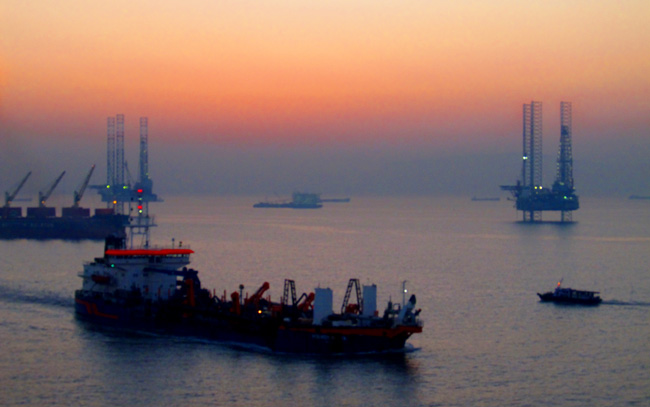
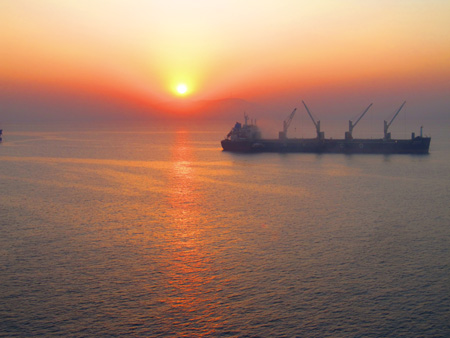
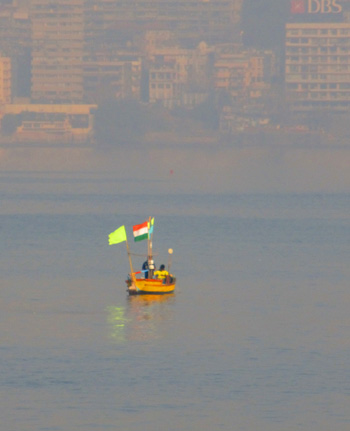
We know the harbor is trashy and the air is brown, but it did make a nice backdrop for our sunrise sail-in.


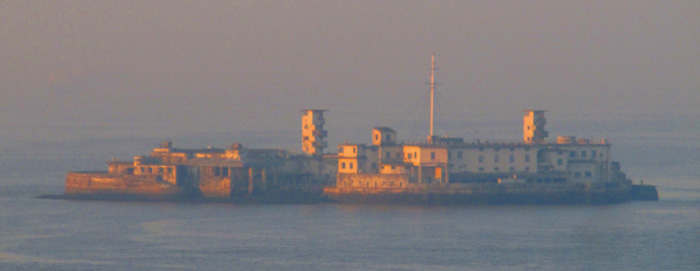
We had passed this island on our way out to Elephanta Island last time, but now we know it is a military post called Middle Ground Island that was originally was used to defend the harbor.

 
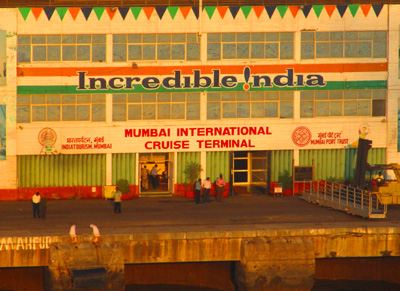
The port sales pitch for India... We needed to carry our immigration paperwork with us in order to get back into the port area. So we were off the ship early.

 
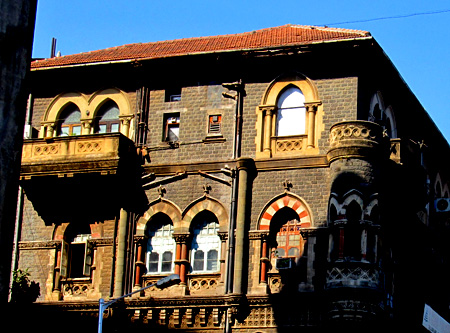
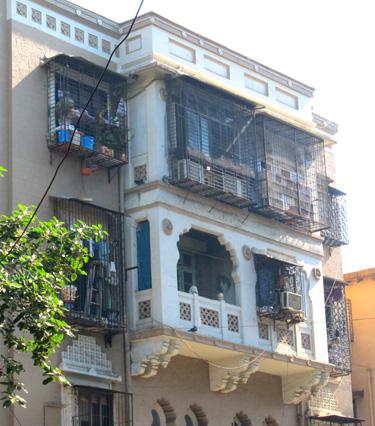
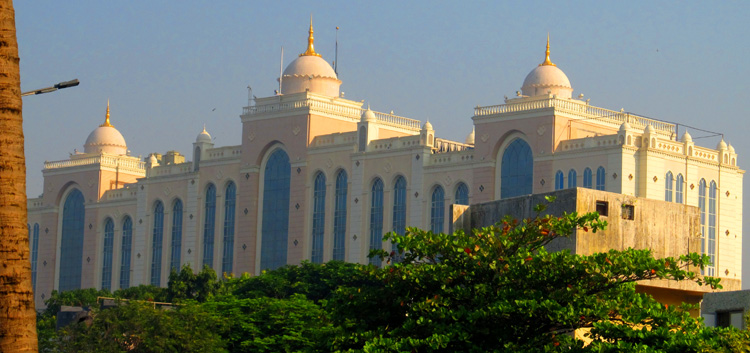
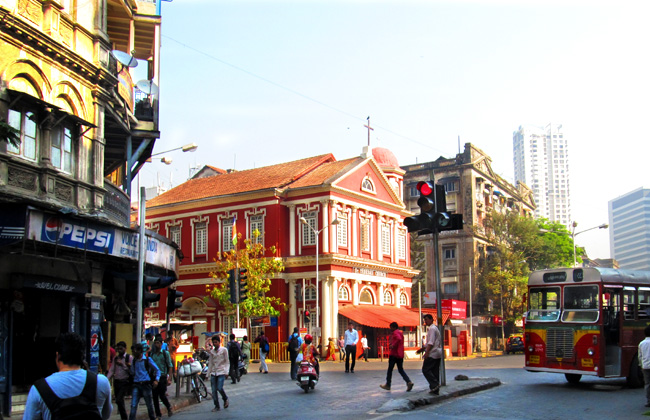
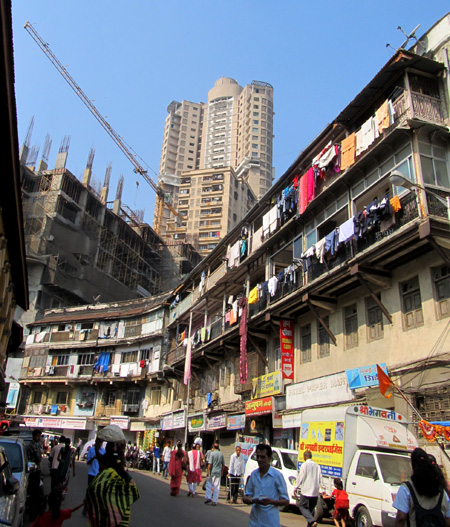
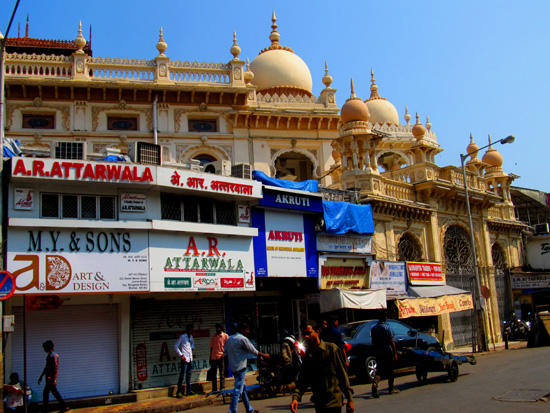
Some interesting buildings along the way.


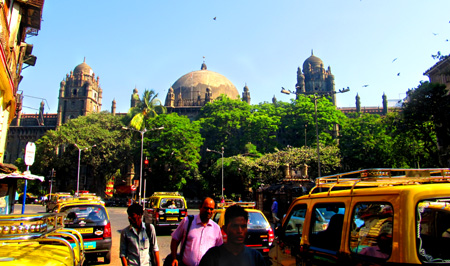
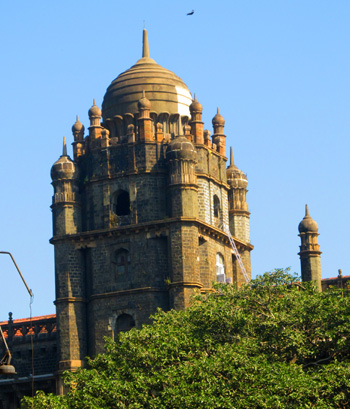
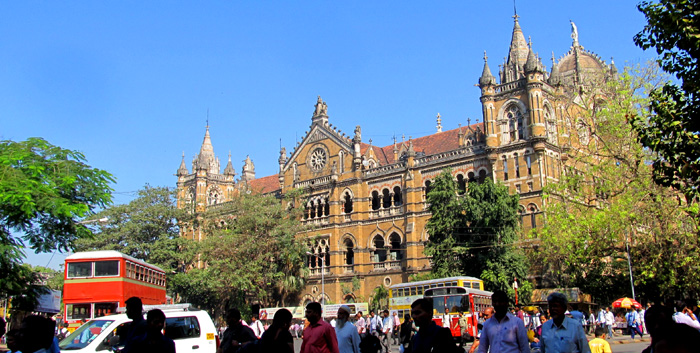
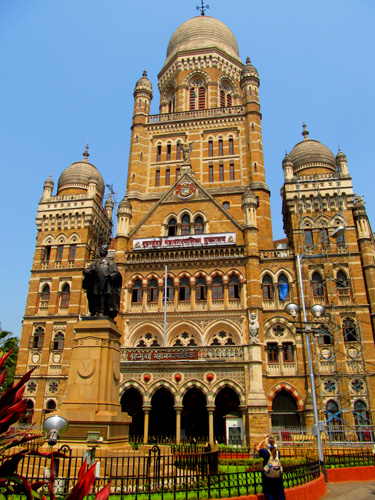
Chhatrapati Shivaji Terminus (formerly known as Victoria Station) is an amazing building with many architectural details. We planned to take a train, but first we need some rupees so we could buy a train ticket.

 
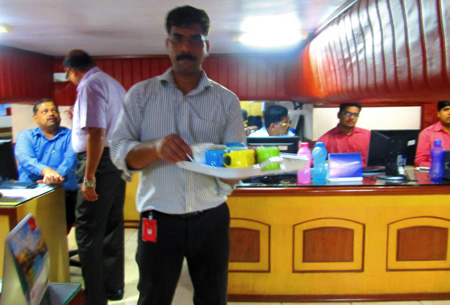
We were directed to a Thomas Cook travel agency and then to a warren of men working upstairs in a low ceilinged space with a coffee boy distributing drinks. First they said we'd have to wait an hour for cash, but eventually said that it might only take 20 minutes or so. It's not like we were changing a lot of money, only $40, but the grief for doing so seemed really odd.


There were no written schedules or routes, so we stopped and asked people for help. We were headed out to Sanjay Gandhi National Park and knew the town was Borivali and that it was 25 miles from Mumbai. When we got two answers that were the same, we knew we were on the right track, so to speak.

 
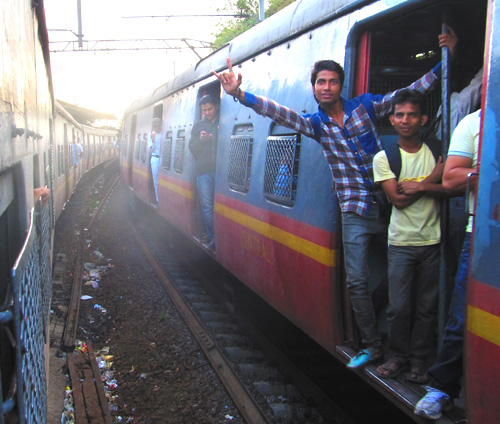
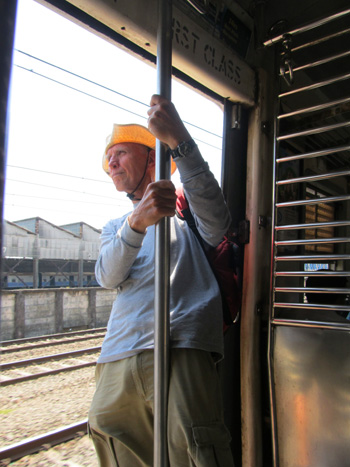
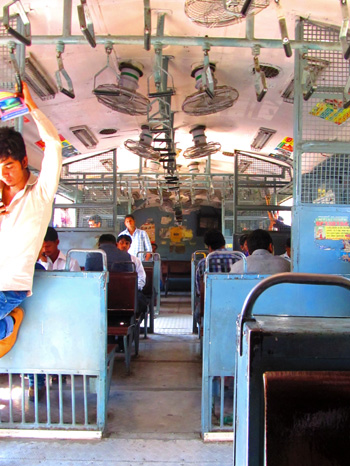
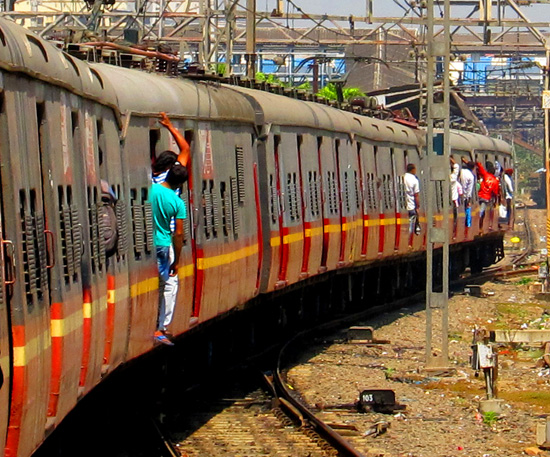
Women traveling alone or with children had their own special car, so I was one of the few females on the coed train cars. Dean with his camera in his pocket hung out the door as did many of the other men, it was hot in the cars and the ceiling fans did little to cool things off.


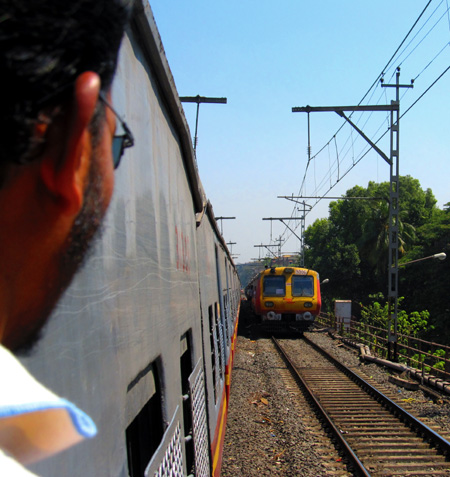
Photos from the train...


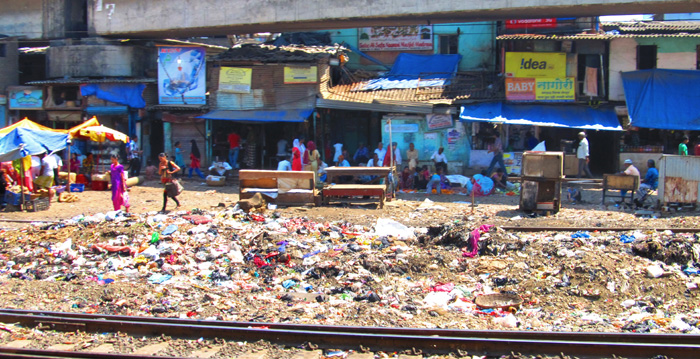
People were living along the tracks.


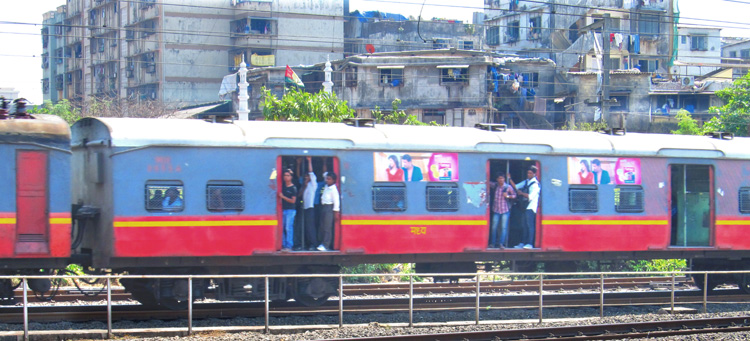
Here our train was switching tracks.

 
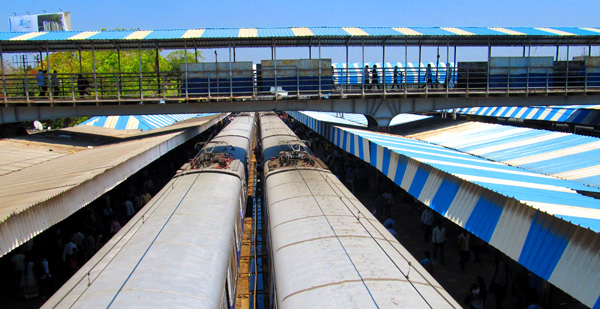
Then we had to switch trains and tracks by walking up and over on a pedestrian overpass to reach the train to Borivali.

 
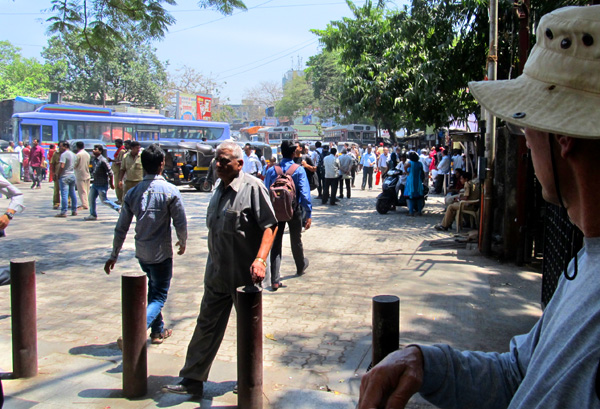
A knot of traffic, taxis and tuk-tuks, filled the parking lot next to the Borivali station, so we walked out to the street and asked a young woman about a bus to the park. She told us is was only a 10 minute walk. All our information told us that we'd need a taxi or tuk-tuk, but only private cars were allowed in the park, so we were happy to walk the local streets instead.

 
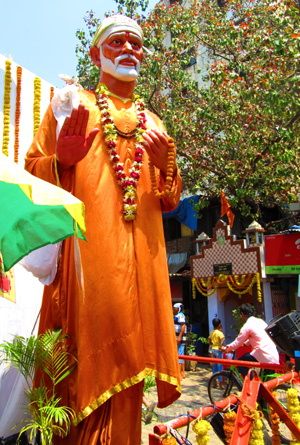
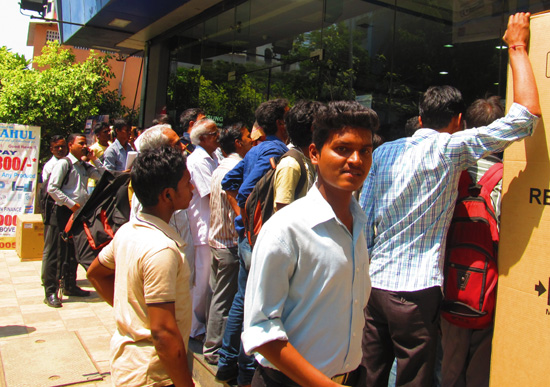
This wise man statue is also seen in the above photo, but how can he get any attention when so many are watching the soccer match through the store windows.

    
We paid the 40 rupee entrance fee (about 70 cents) to Sanjay Gandhi National Park and walked past the drivers of private cars who were anxious to take us to the sites and warned us that it was 7km to the caves.


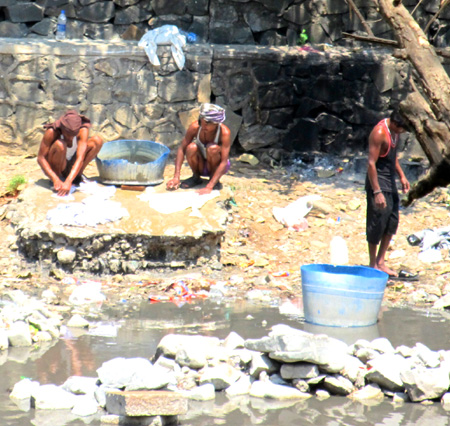
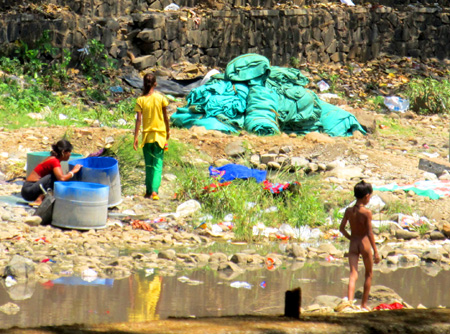
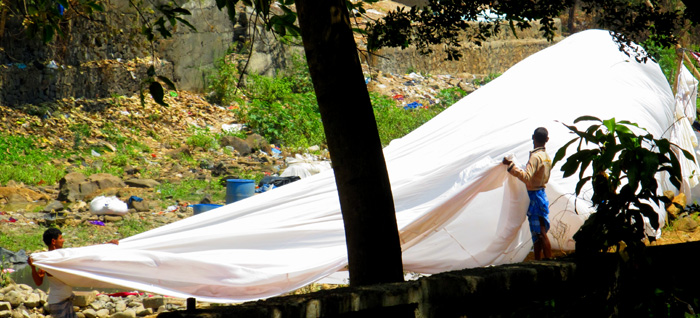
Not far from the entrance, we saw this laundry operation over the fence. While it was not as orderly or as extensive Dhobi Ghats that we'd seen in Mumbai, it was amazing and located on the banks of a river.


As we'd seen before, beating the laundry was the preferred method. We couldn't image what the heck this very large piece of fabric was, but whatever it was, it was clean.


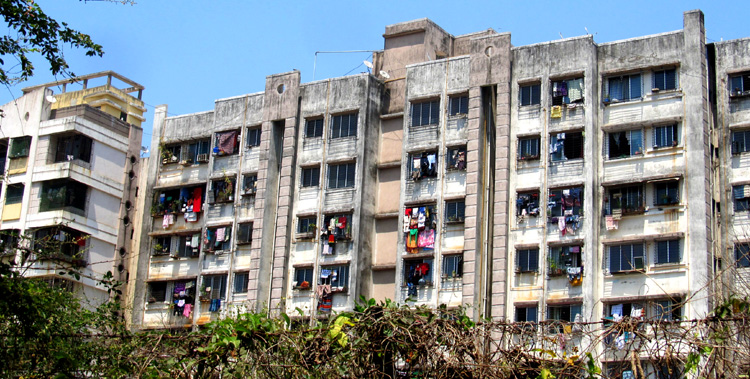
The building above the laundry...

 
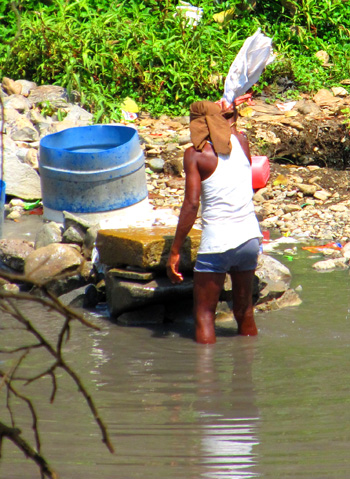
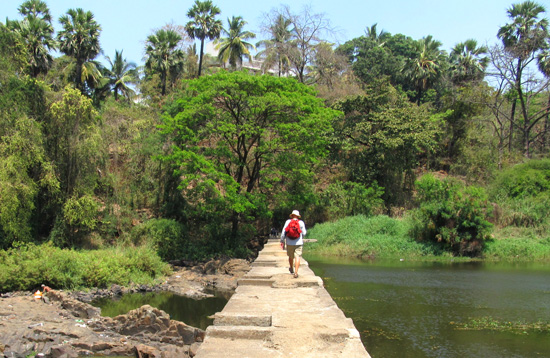
We continued walking along the wall inside the park and then walked out on a dam and looked back down the river where the laundry was. A man was washing himself.


A view of laundry from this vantage point.

 
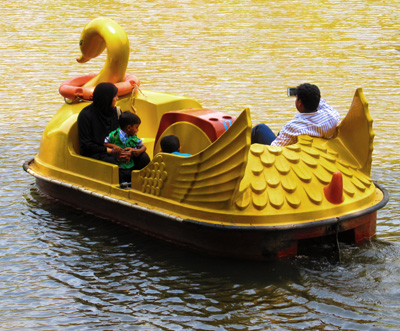
We sat on the tiered wall of the lake for our picnic and watched the families paddle around in the rented swan boats.

 
We loved learning about all the cool kingfishers that live in India and were amused at all the rules about the water in the lake, but right downstream it's being sullied by the washing of clothes and more, but we didn't throw anything in the lake because we did not wish to be labeled as "errants."


In case we'd forgotten our lunch, food was available.

 
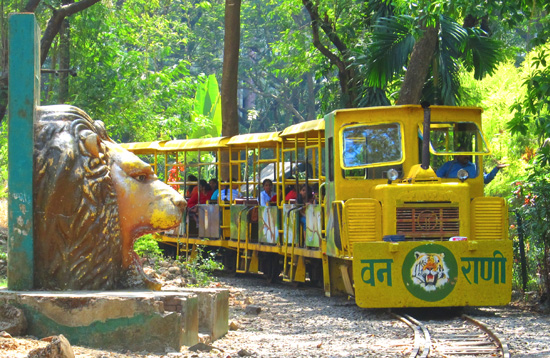
We walked away from the lake and saw this mini train roll by what used to be a zoo, apparently.

  
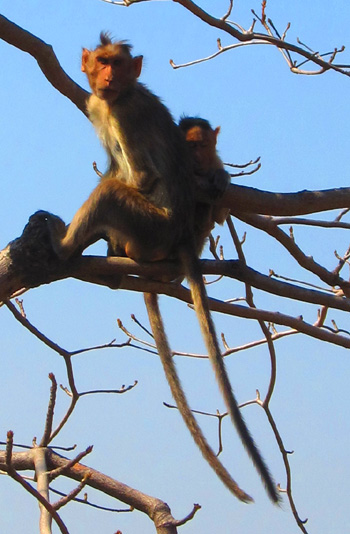
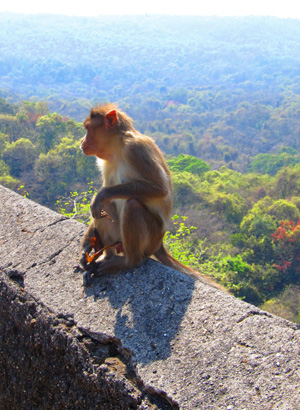
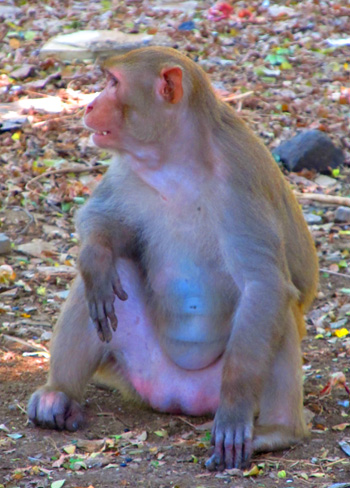
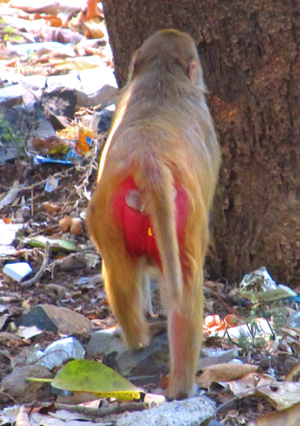
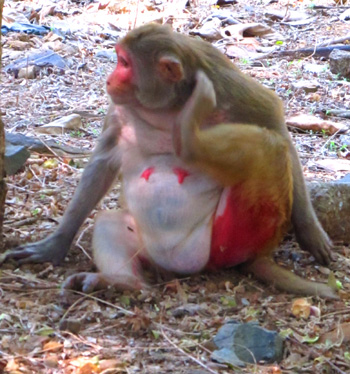
But who needs a zoo when the red-bottomed rhesus monkeys roam freely.


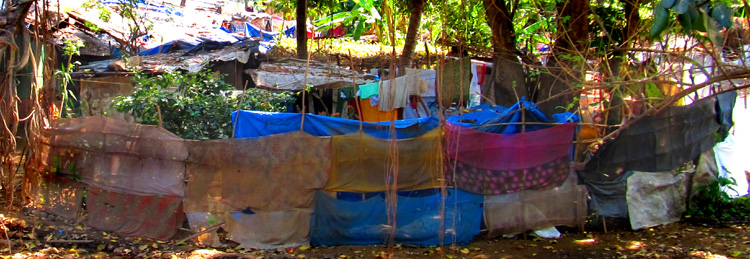
Squatters have set up semi-permanent camps here in the park.

 
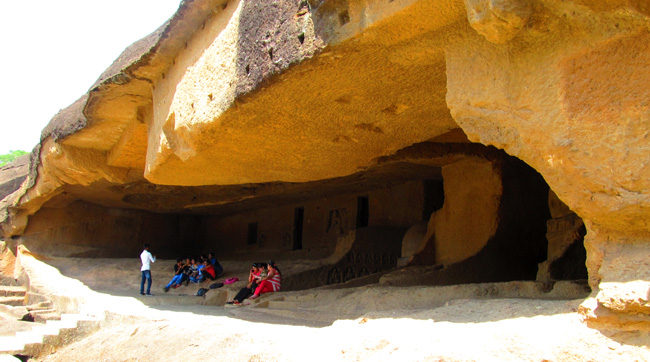
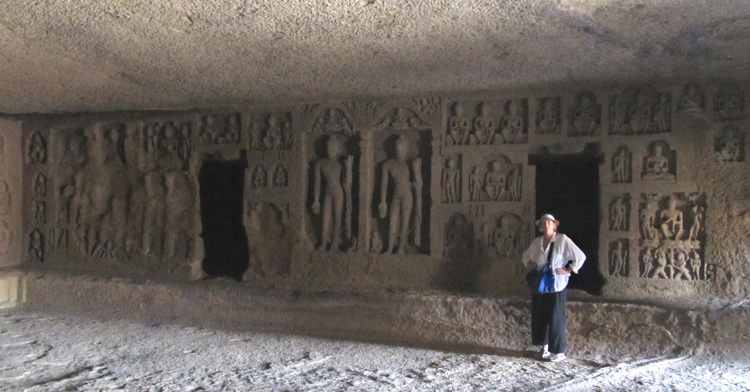
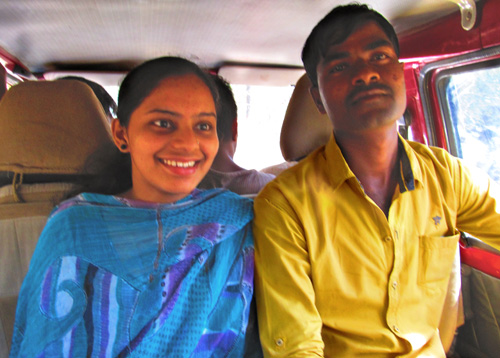
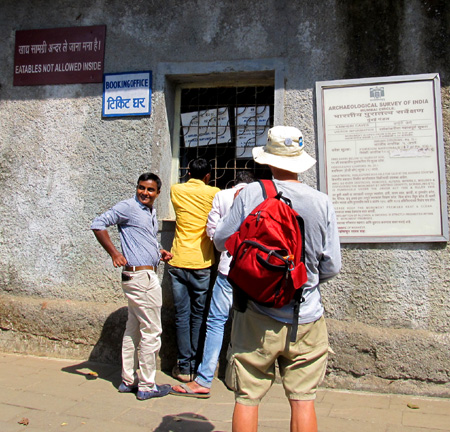
We walked for a mile or so along the road before a collectiv van picked us up. They have a set fee within the park. This young couple joined us later. The Kanhery Caves charges a $2 entry fee for foreign nationals: that was us. These caves were carved into this volcanic rock over 300 years by Buddhist monks beginning in the first century BCE. See more details on Wikipedia.

 
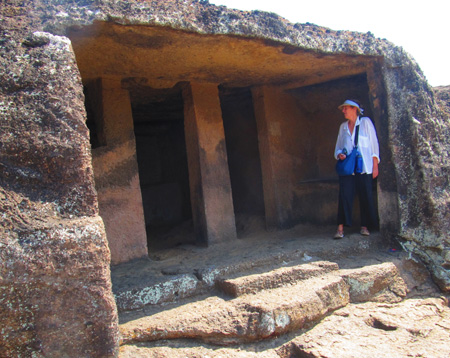
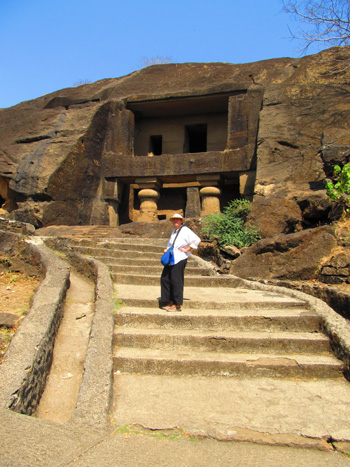
Here's the first cave out of 109. Note the aqueduct next to the stairs. This site was designed to collect water and store it in various cisterns.
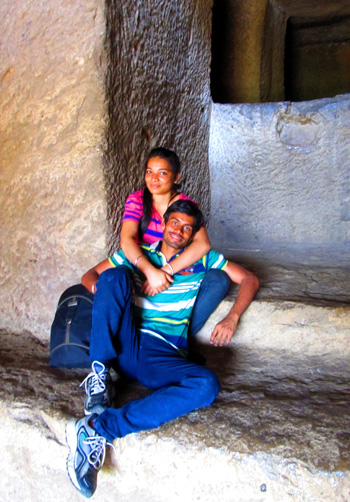
 
Young people enjoying the caves...
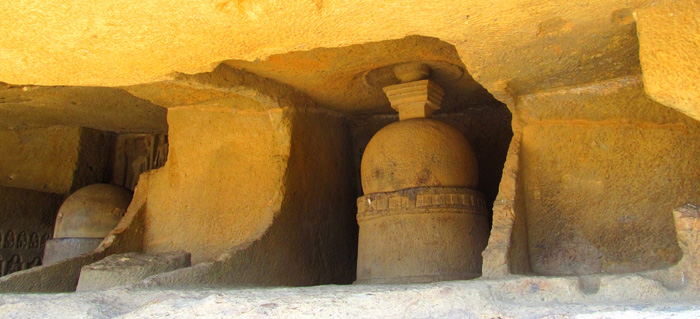


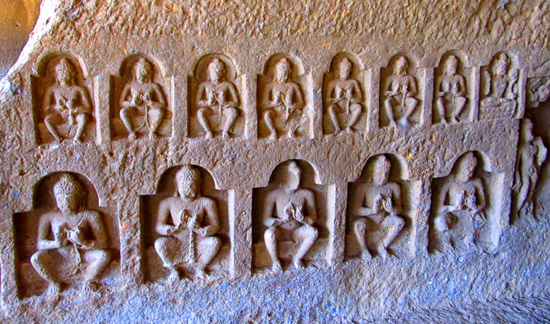
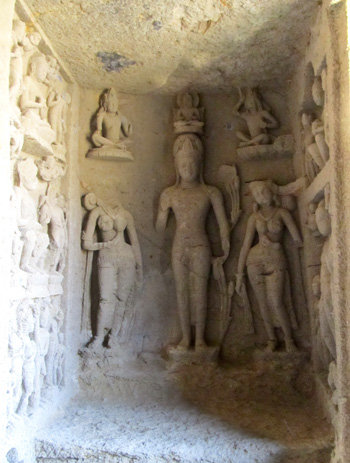
Cave 3 was the most impressive. When you walk between the pillars, large Buddhas are carved into either side of the alcove.

 
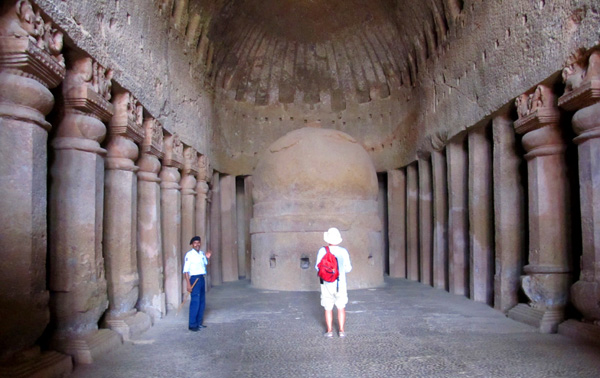
And when you go inside, it's a prayer hall. The guard went in with us and told us to wait in the main area while he hid behind a pillar and began chanting a Buddhist prayer. Goosebumps! He admitted that he was Hindu, but had learned a few chants to demonstrate the acoustics of the room.
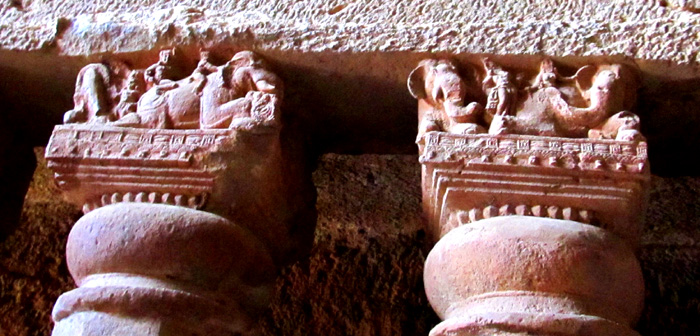

Details from the tops of the columns in this room all feature elephants in different poses.
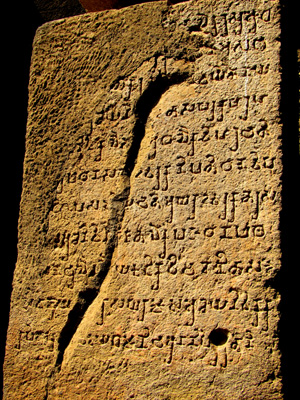


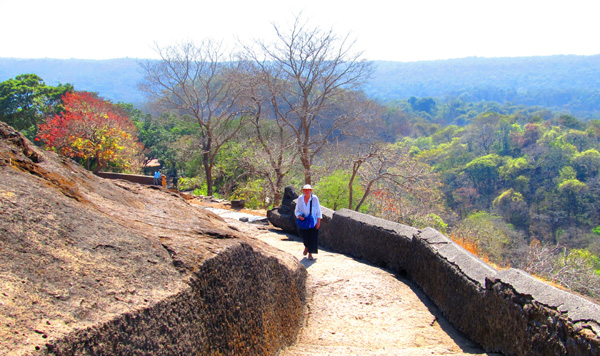
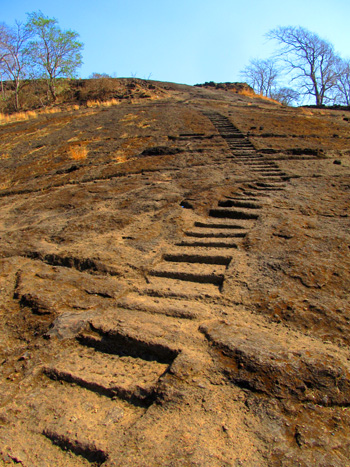
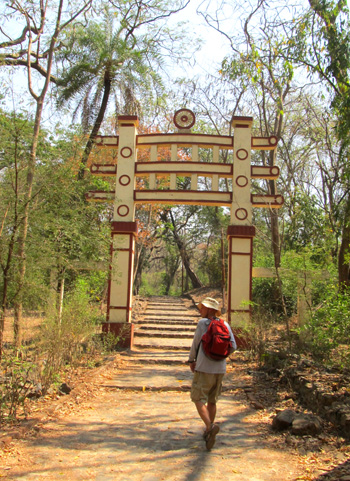
We climbed steps carved into the side of the mountain to reach some of the other caves.
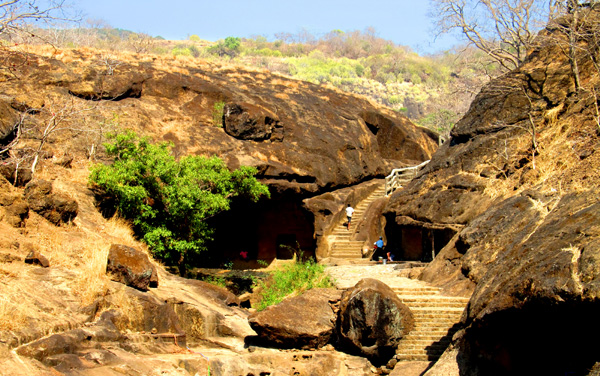


Some of the caves were quite simple and were designed as living quarters for the monks.
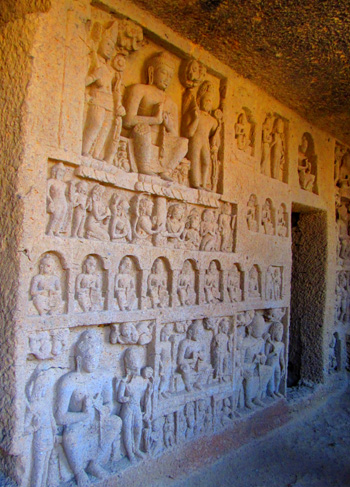


After inspecting many of the caves, we headed back down via a different route.
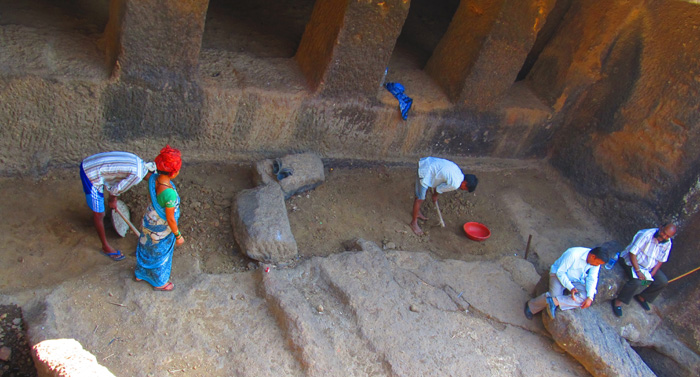

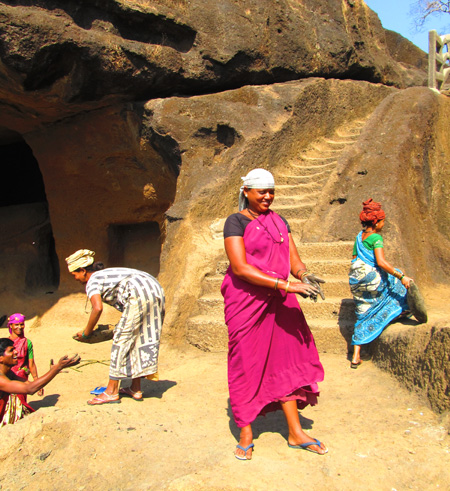
We were surprised to see this excavation, not so much that it was happening, but the way in which it was being done. Two supervisors were watching while several young men scraped dirt and gravel with primitive looking hoes and placed their scrapings into wide pans.

 
The young women clad in saris and flip-flops carried the pans on their heads and then handed them to a line of other female workers who eventually dumped the loads into a ditch not too far from the site.
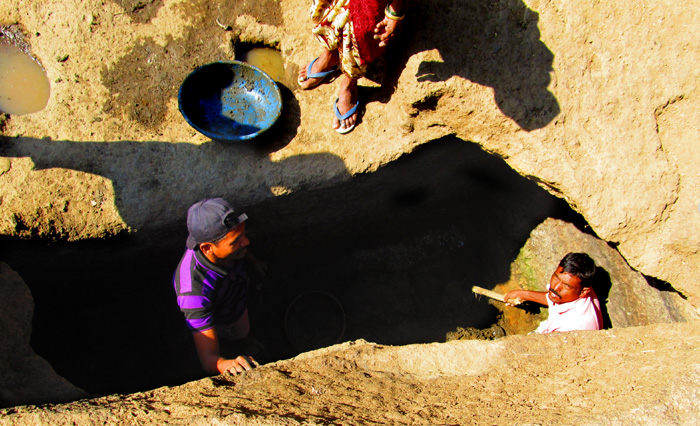

The excavation was also taking place in a pit in front of the same cave entrance.
 
We continued our descent back to the entrance with a short break to talk to some more monkeys.
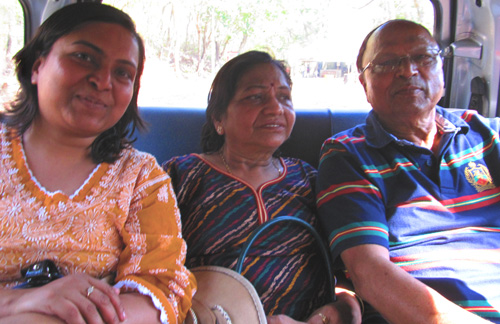
 
A collectiv was waiting at the entrance to the caves. While we waited for more passengers and during the 7 km trip to the park entrance, we had a lovely conversation with this young woman who lives in London and her very proud parents who live near Cochin, our previous port.


This school on wheels was just inside the park entrance and probably serves the children of the park's squatters.

 
We found a liquor store near the train station and bought a chilled bottle of Kingfisher beer and tried not to attract too much attention while we drank it down, by moving to a side street. Very refreshing. Then back to the trains...
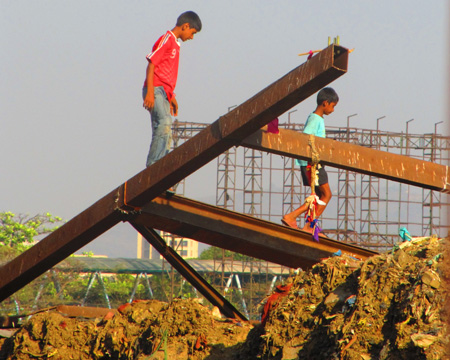
 
Photos from the door... People continue to be surprised and pleased to see us on a local train.


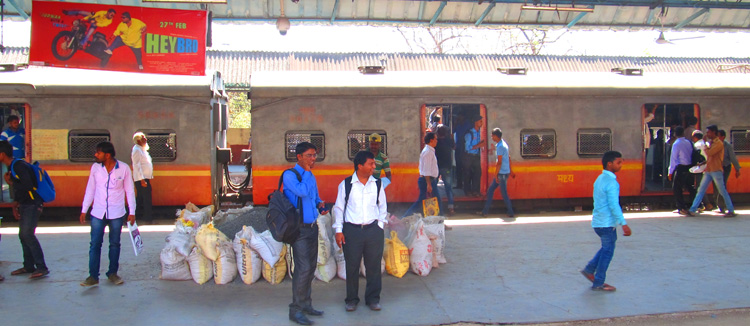
Women gathering to board the woman's car.
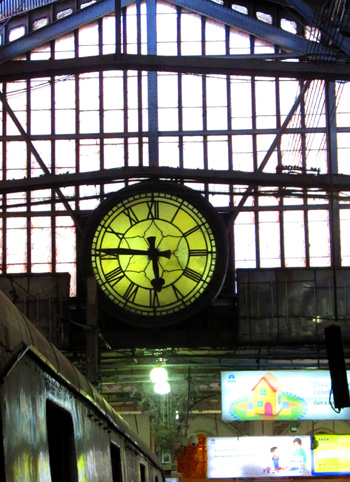
 
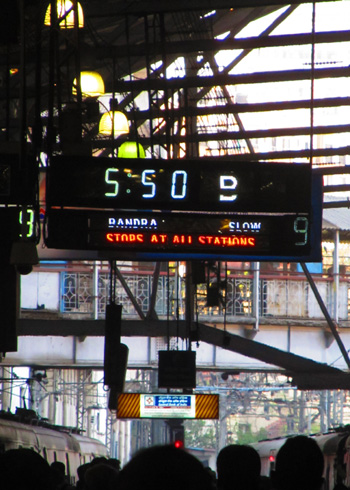
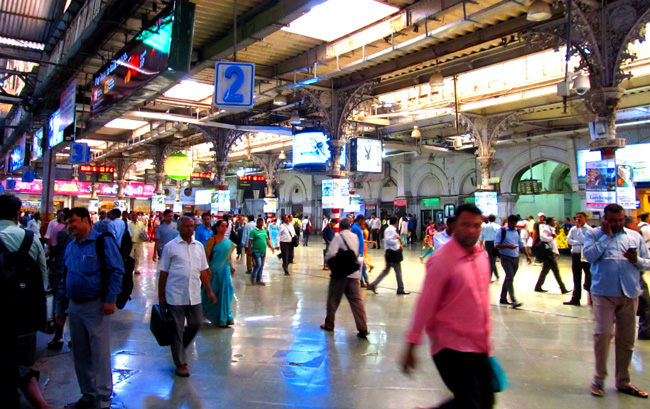
Much like India itself, the two clocks in the station back in Mumbai highlight the contrasts of old and new. By the time we got back to the ship, we were famished.
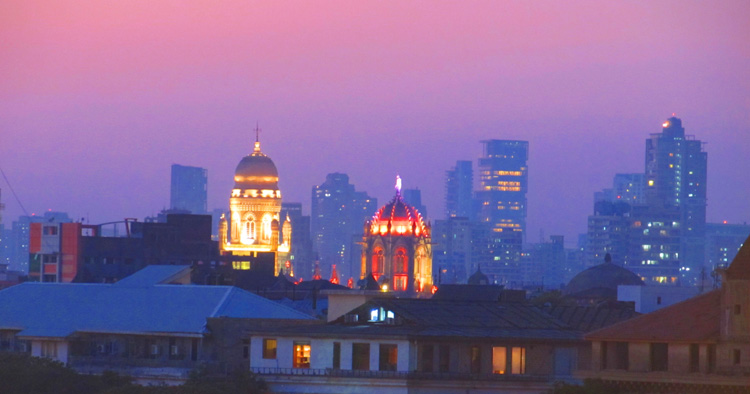

From the ship: the fading sunlight turned the thick air over the city pink and purple. What a great day.
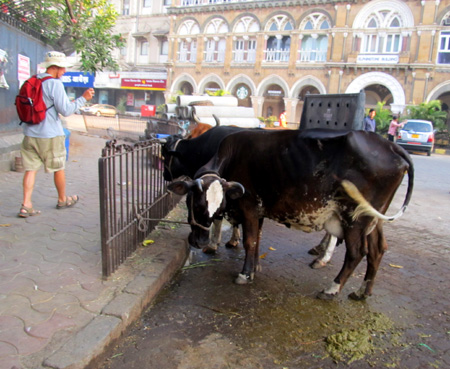
 
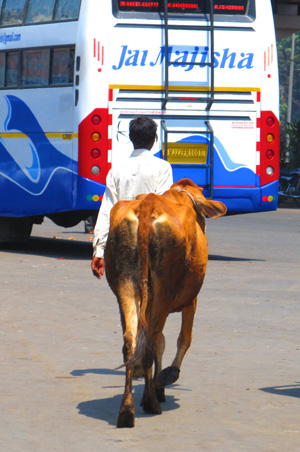
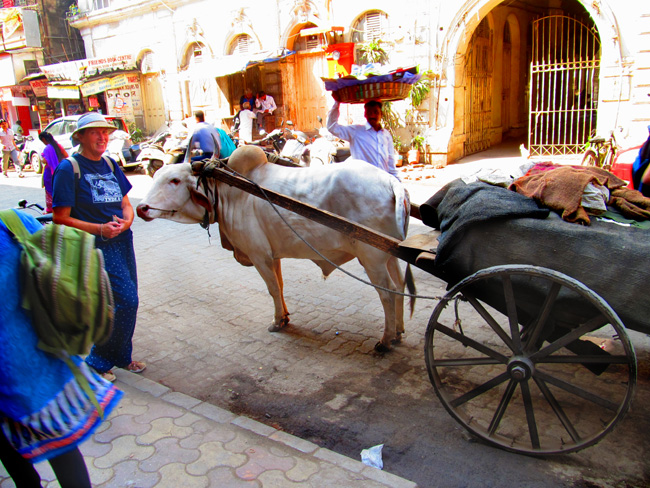
Street cows... Our plan today is to walk across the Mumbai Peninsula. When the British ruled, they created this land by filling in between seven islands in a bay. (See Wikipedia.) It's a little less than a mile across as the crow flies, but our route was more circuitous.

   
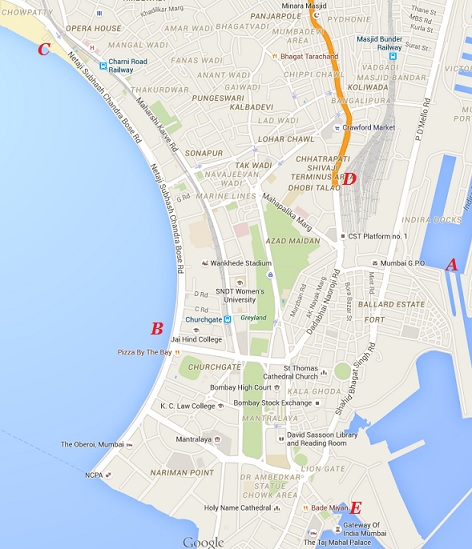
Okay, for orientation, a Google map of Mumbai: We were docked at Indira Dock (A) and walked to B where we then walked north along the bay to C, Chowpatty Beach, and then back across a wider part of the peninsula to the dock. The day before we walked to the train station D to take the local train to the park. In 2012, we walked to E, the Gateway to India, where we caught the ferry to Elephanta Island.

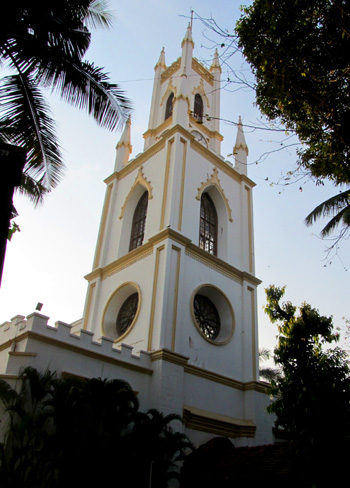
There are a number of churches in Mumbai from missionary work during colonial days. This white steeple belongs to St. Thomas' Cathedral (C.N.I), which you can see on the map.


Another view of Victoria Station

 
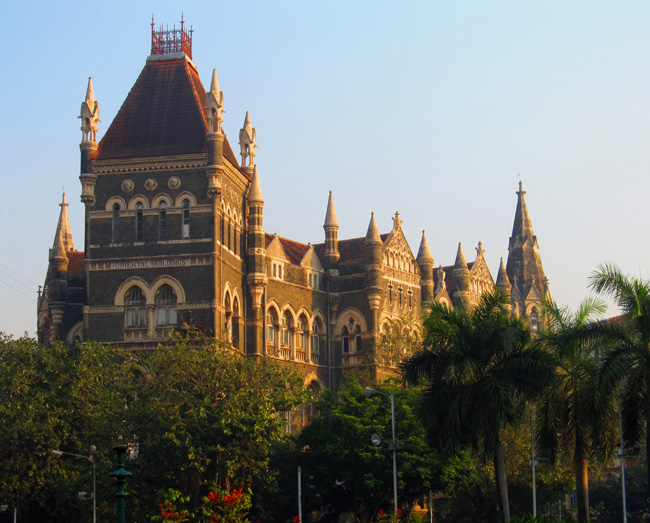
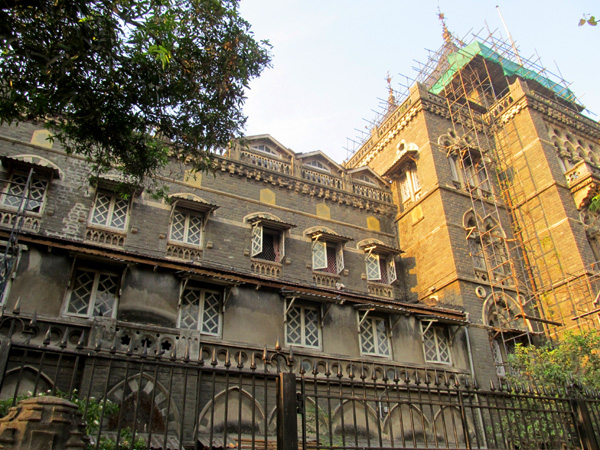
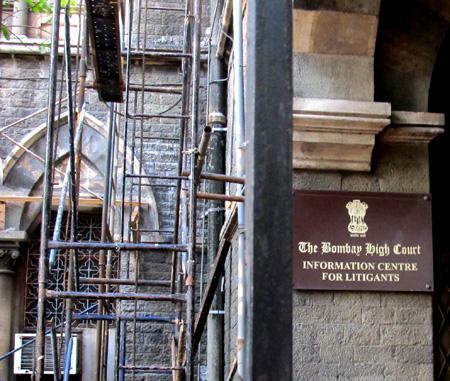
The Bombay High Court building is under renovation. You can also see this on the map.


We stopped to watch the cricket practice, which was taking place in the long green patches on the map.


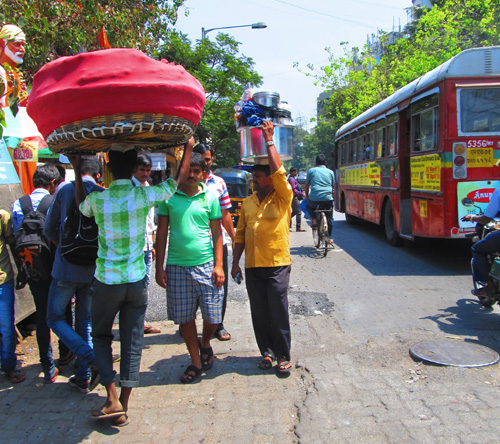
While it may be less than a mile as the crow flies across the peninsula, the ravens ride across on buses.

 
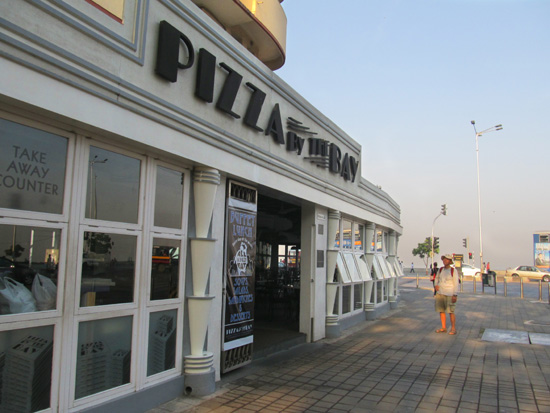
And here we are on the far side with a modern pizza place (on the map), which was open even at this early hour.

 
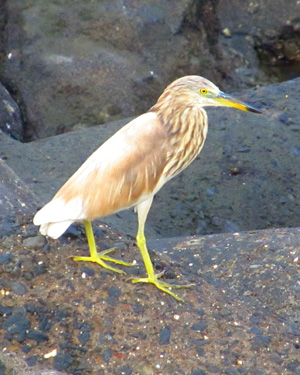
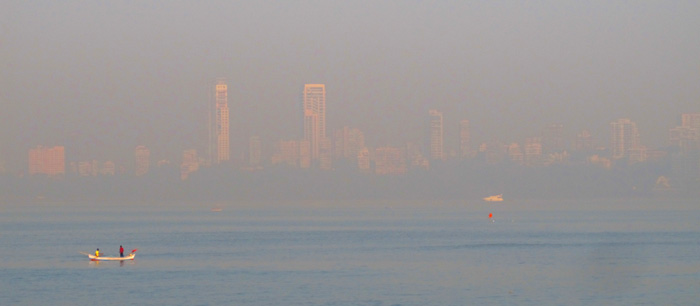
Up close a pond heron, in the distance smog...

 
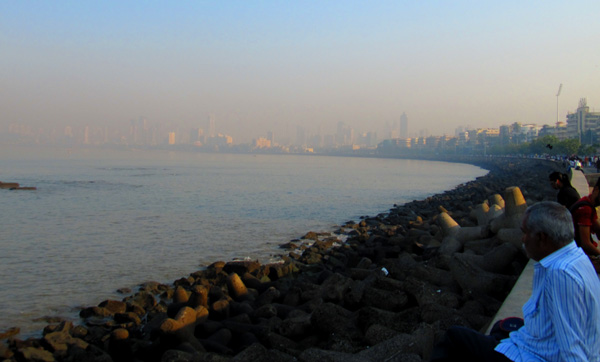
Even with the thick air, some people were jogging along this long curving shoreside walkway.


A hospital.

 
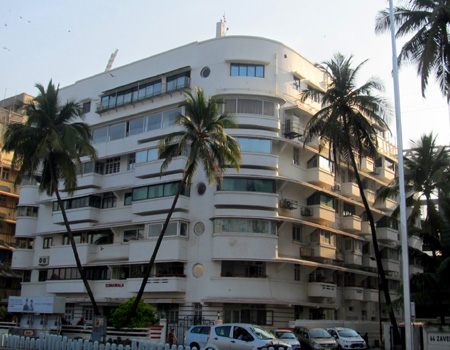
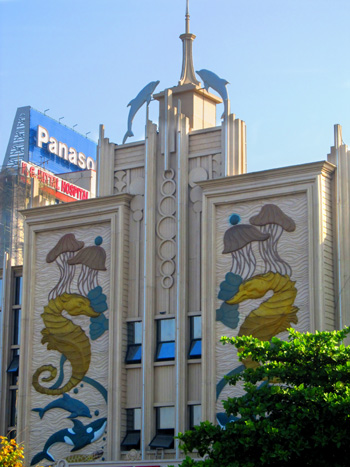
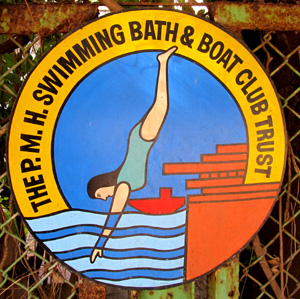
The Taraporewala Aquarium building and a swim club near Chowpatty Beach.


The swim club has small sail boats ready to take out...


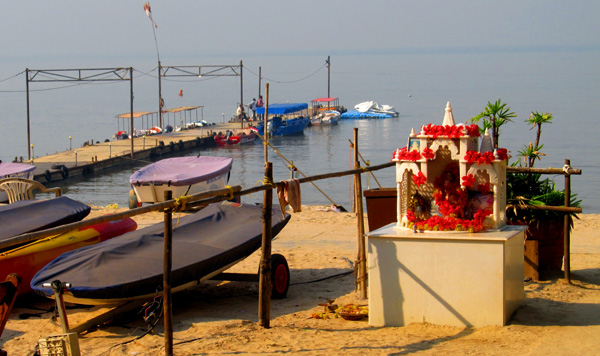
A small shrine on the beach.

   
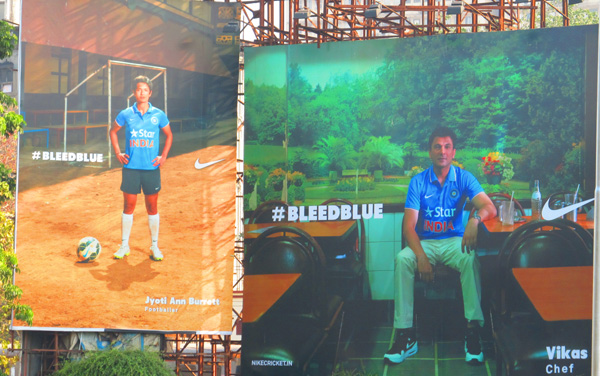
The ad campaign for the world soccer team seems to be thicker on this side of the city.


Here we are at Chowpatty Beach where people are bathing and changing their clothes. We visited Chowpatty and the Hanging Gardens, which are part of that green space on the hill behind the beach via taxi in 2012 .

 
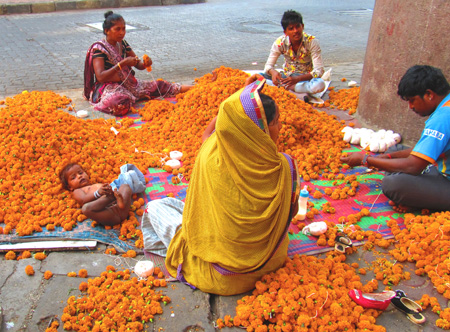
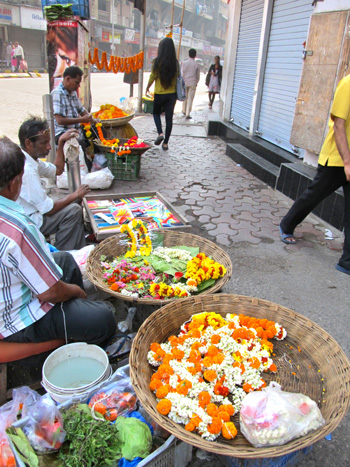
Marigold flowers! People create flower chains, which are used as offerings in Hindu and Buddhist temples.

 
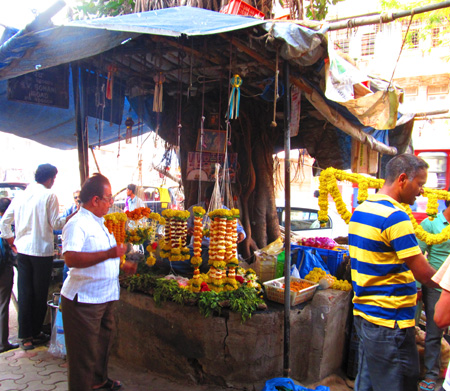
A tree becomes a tent for a flower vendor. A red brick Christian building contrasts with its surroundings.


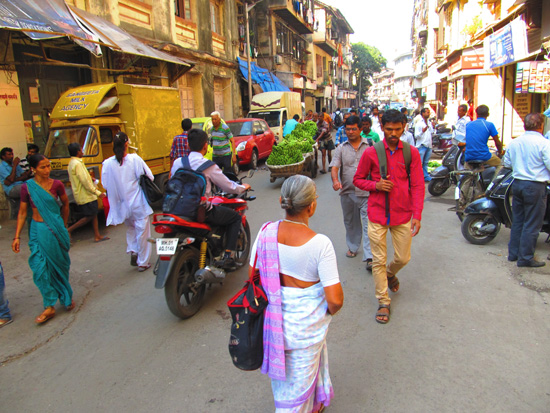
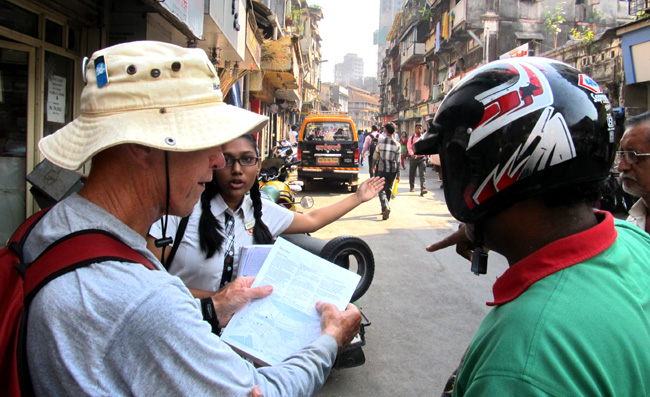
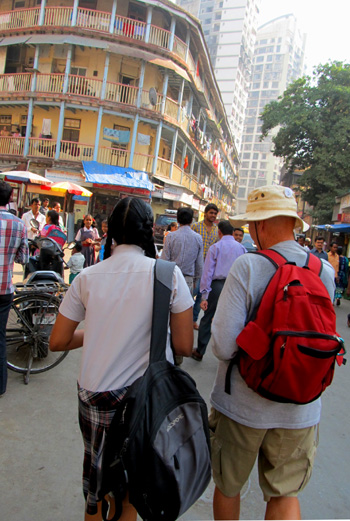
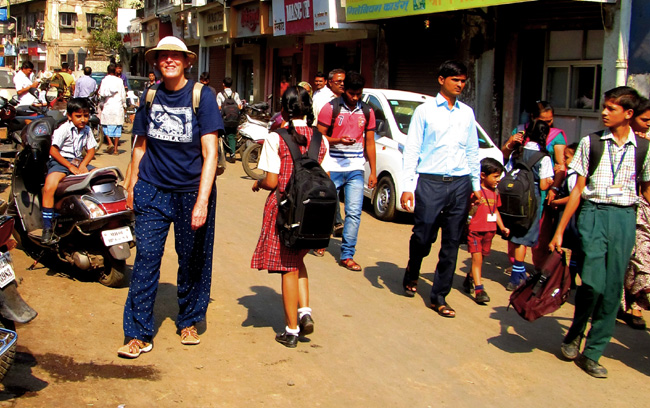
Dean asks for directions to a market he'd read about. A school girl with excellent English agrees to walk with us because she's also going in that direction.


I received a number of favorable comments on my India tee-shirt, but we really stood out on these streets.


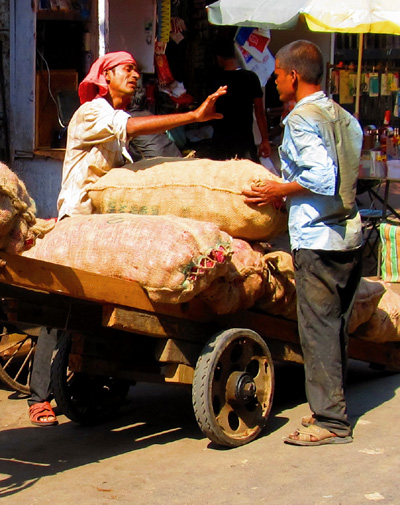
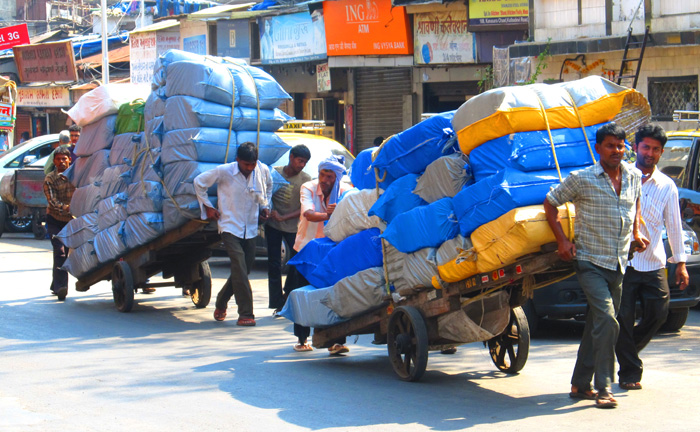
Notice the load the guy in white is carrying:  it's higher than he can reach.


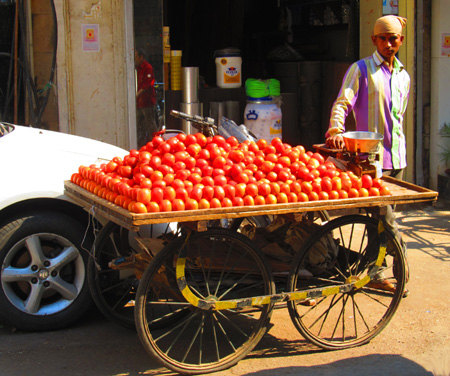
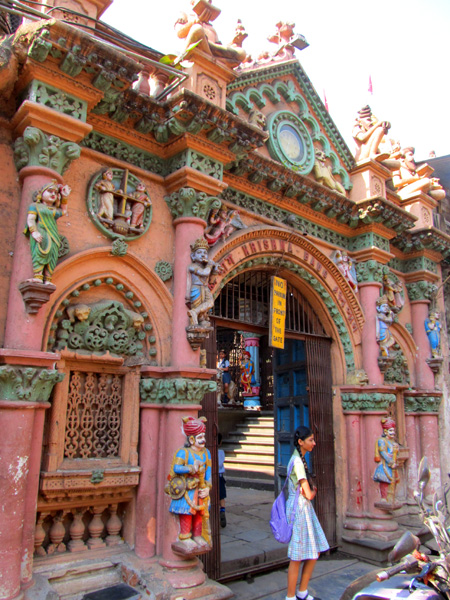
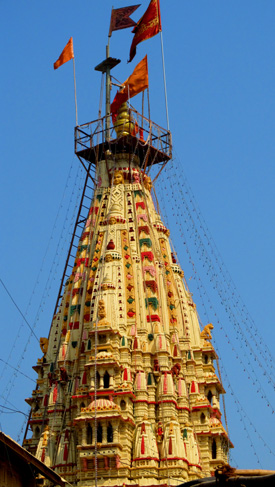
We loved the really old cart with the tomatoes that looked like it might have been an elegant luggage cart during colonial days. A Hindu temple looks a little faded, but looking at the school girl outside its doorway, it may house a school.

 
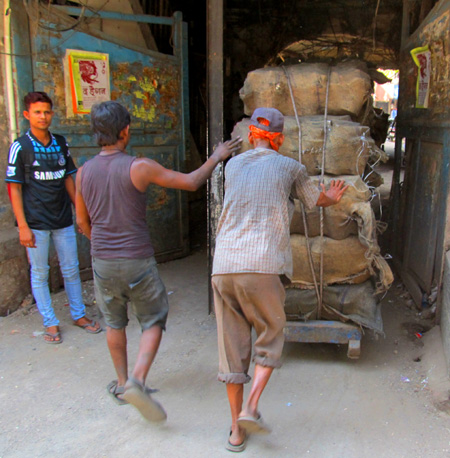
This huge burlap-wrapped load was pushed slowly up the street by three guys and then steered into a narrow alley.


The grimace is because my elbow had just been licked!


Is this what it means when "they" say you need to be "all in" when it comes to your business?

 
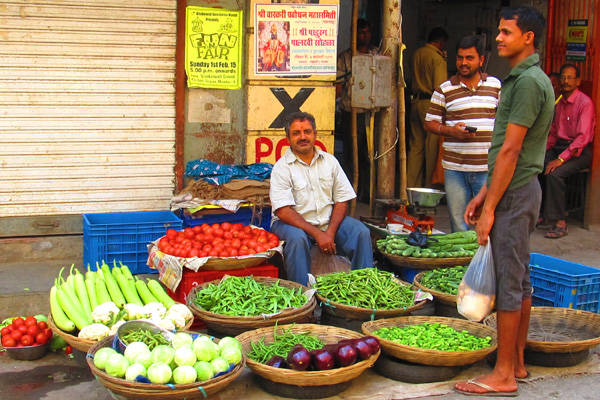
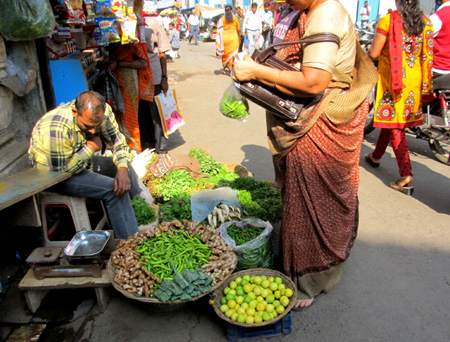
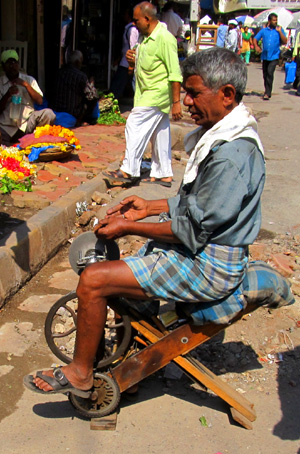
A knife sharpener with his pedal-powered wheel makes the rounds of the vendors. Potato negotiations.


After passing by all the vendors on the street, we finally made it to the official market.

 
The porters await clients.

 
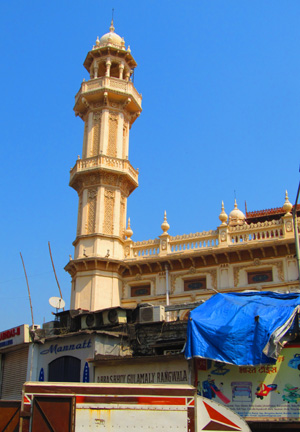
A mosque behind some storefronts.


On our way back to the ship, we passed these workers repairing the infrastructure.

 
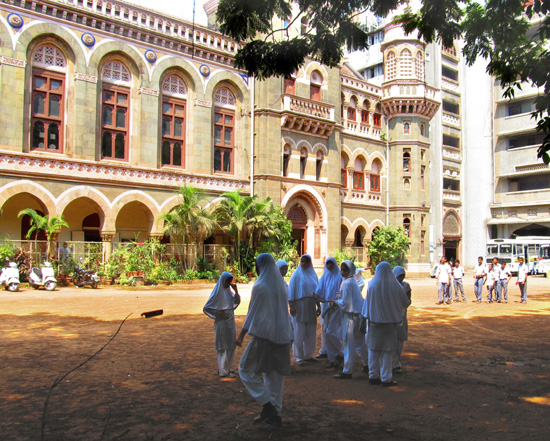
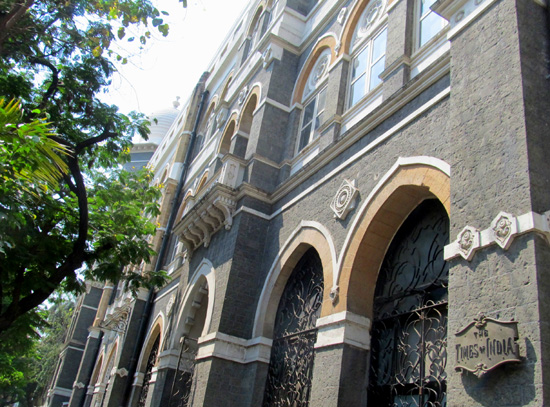
Boys and girls play separately at a Muslim school. The Times of India building: it's a newspaper.

   
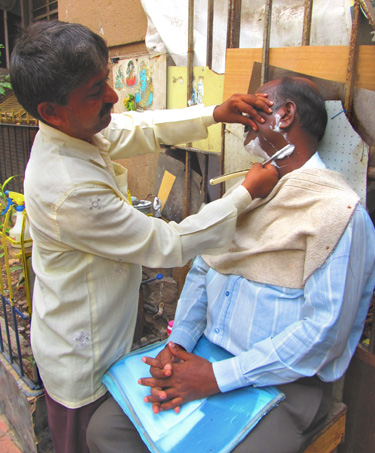
We'd seen a number of outside barbers, so we asked to take a photo: Both the barber and the client agreed.

 
We asked about a small garden that we'd seen on our map, which would be on our way back to the dock.

 
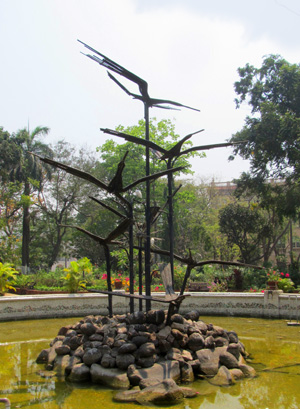
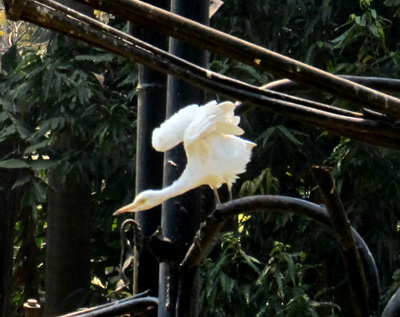
The Horniman Circle Garden was located in a traffic circle and had won an Urban Garden award in 1998 from the Indian Heritage Society. There was not much to see, but the bird sculpture did serve as a perch for some cute white herons. Our lungs were relieved to be out of the murky Mumbai air. Dean's Log: Mumbai

It was a day at sea until we got to Dubai, which is the total opposite of Mumbai in so many ways.

On to Dubai ... >>

Main Adventure Page

Top of page:

© Sky-Bolt Enterprises 2001-2015